Hosted ISA Video 01

Empowering neurologists, physicians, and communities to prevent, recognise, and treat stroke — saving millions of lives.

A stroke kills 1.9 million brain cells per minute. Learn all six warning signs and act immediately.
Sudden loss of balance or unexplained dizziness.
Sudden blurred or double vision in one or both eyes.
Facial drooping or an uneven smile on one side.
Sudden arm or leg weakness on one side of the body.
Slurred or garbled speech — ask them to repeat a phrase.
Call an ambulance and reach a stroke-ready hospital. Note the time symptoms started.

Founded in 2002, the Indian Stroke Association brings together neurologists, neurosurgeons, and allied health professionals committed to reducing the burden of stroke across India.
Insights from our leadership on stroke care and awareness across India.

"It is a great honour to serve as President of the Indian Stroke Association. Together, we can transform stroke care across every part of our nation..."
Read full message →
"Our association has been actively engaged in awareness campaigns, professional training, and policy-level advocacy to improve stroke outcomes in India..."
Read full message →Raising stroke awareness, improving timely care, and supporting healthcare professionals across India.

Public education campaigns to recognise F.A.S.T. signs and act within the golden hour. Empowering communities and clinicians across every state.
Learn more →
A nationwide campaign to reduce treatment delays through early identification and rapid response. Every minute without treatment is brain lost.
Learn more →ISA's Stroke Accreditation Programme certifies hospitals that meet national standards for acute stroke care — from emergency protocols to rehabilitation facilities. Join 200+ accredited centres across India.

Videos copied from the previous ISA video library, presented in the updated site layout.
Stay updated with conferences, workshops, and initiatives that bring together experts to advance stroke care across India.
Access CME credits, guidelines, the ISA journal, and a network of 1400+ stroke professionals across India.
The complete video library from the previous Indian Stroke Association website, now arranged for the new responsive layout.
Browse hosted ISA videos and official YouTube messages in one place. The layout adapts from single-column mobile viewing to a multi-column desktop library.
Indian Stroke Association events, conferences, and academic programmes.
Indian Stroke Association conferences, summer schools, and national stroke prevention campaigns.
Venue: Lucknow
Venue: Kolkata
Venue: Chennai
Venue: Mumbai
Venue: Virtual Conference
Cancelled due to COVID-19
Venue: Ahmedabad
Venue: Hyatt Regency, New Delhi
Venue: Amristar
Venue: Hyderabad
Venue: Chandigarh
Venue: Thiruvananthapuram
View GalleryVenue: Ludhiana
Venue: Pune
Venue: Indore
Venue: New Delhi
Venue: Hyderabad
Venue: Amristar
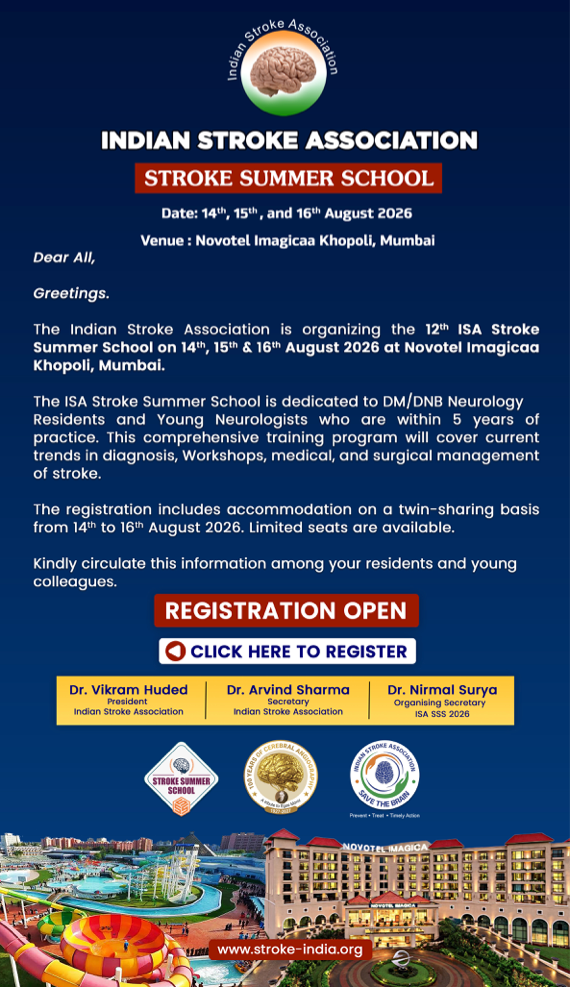
Venue : Mumbai
Venue: Chennai
Venue: HYDERABAD Date: 23RD - 25TH AUGUST 2024
Venue: AMRITSAR
Date: 4TH - 6TH AUG 2023
Venue: UDAIPUR
Date: 19TH - 21ST AUGUST 2022
Venue: VIRTUAL CONFERENCE
Date: 6TH - 8TH AUGUST 2021
Venue: Golden Palms Avenue, Bangalore.
Date: 6th September 2019 to 8th September 2019
Venue: Holiday Inn Resort, Goa
Date: 31st August 2018 to 2nd September 2018
Venue: Chennai
Date: 18TH - 20TH AUGUST 2017
Venue: Munnar
Date: 14TH - 16TH AUGUST 2015
Venue: Pune
Date: 22ND TO 24TH JUNE 2014
Venue: New Delhi
Date: 2ND & 3RD JUNE 2013
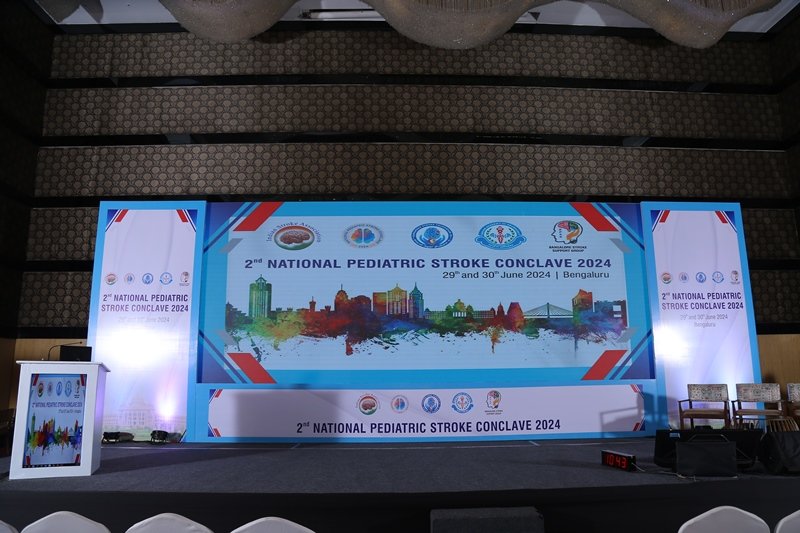
17TH-18TH JUNE 2023
MUMBAI
Young Stroke Neurologist Forum
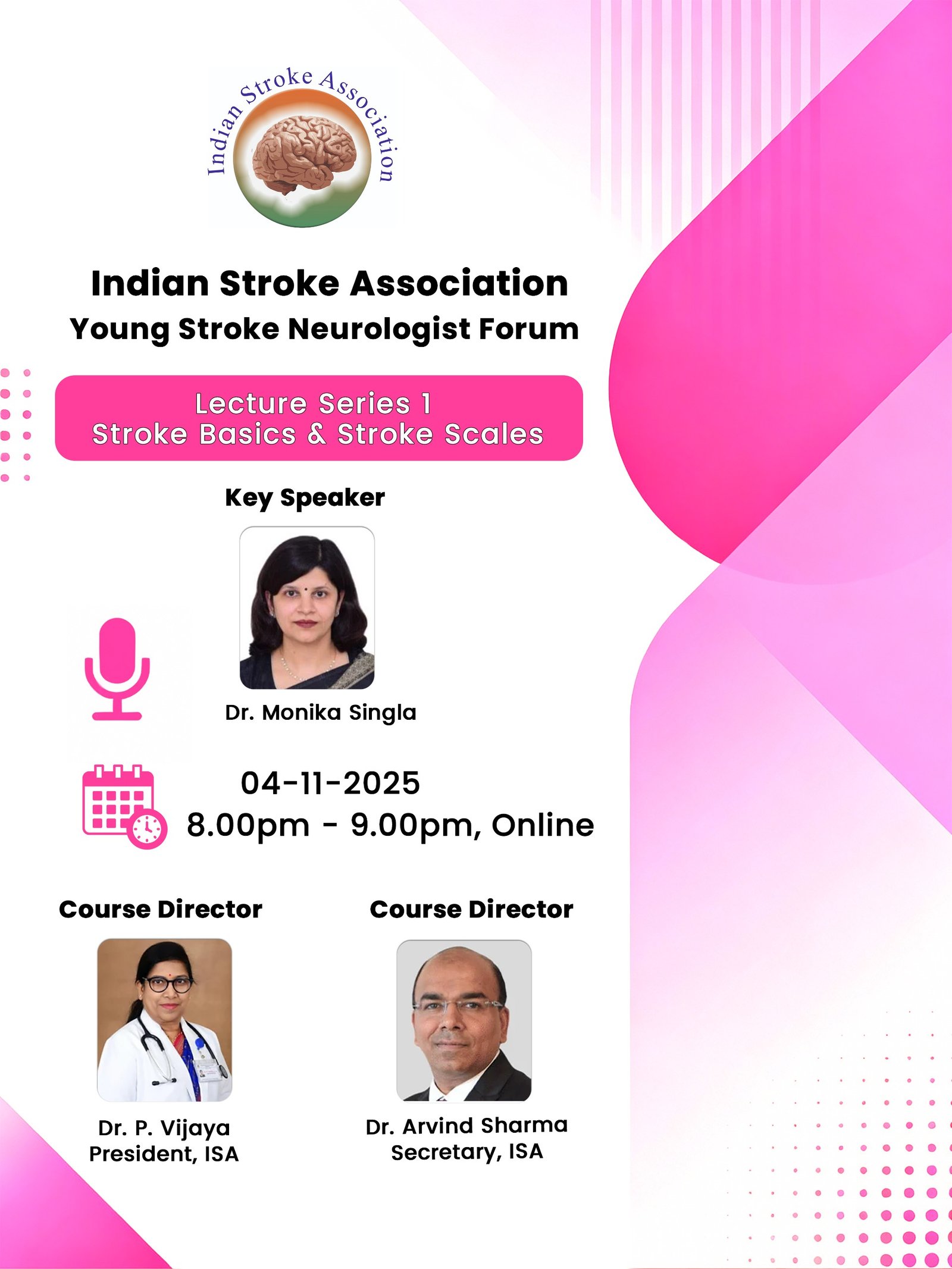
Key Speaker : Dr. Monika Singla
Date : 04-11-2025
Time : 8:00 pm - 9:00 pm
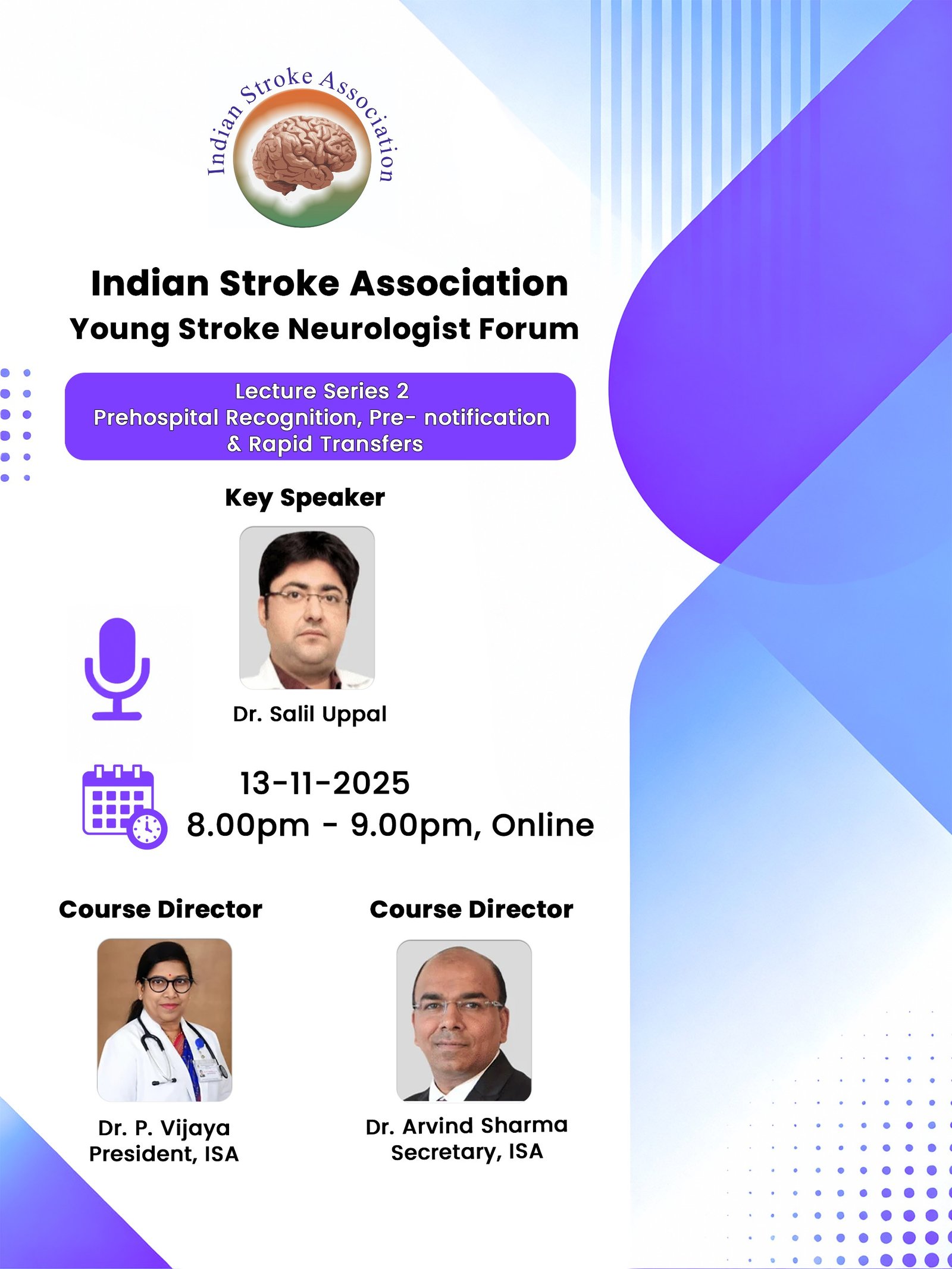
Key Speaker : Dr. Salli Uppal
Date : 13-11-2025
Time : 8:00 pm - 9:00 pm
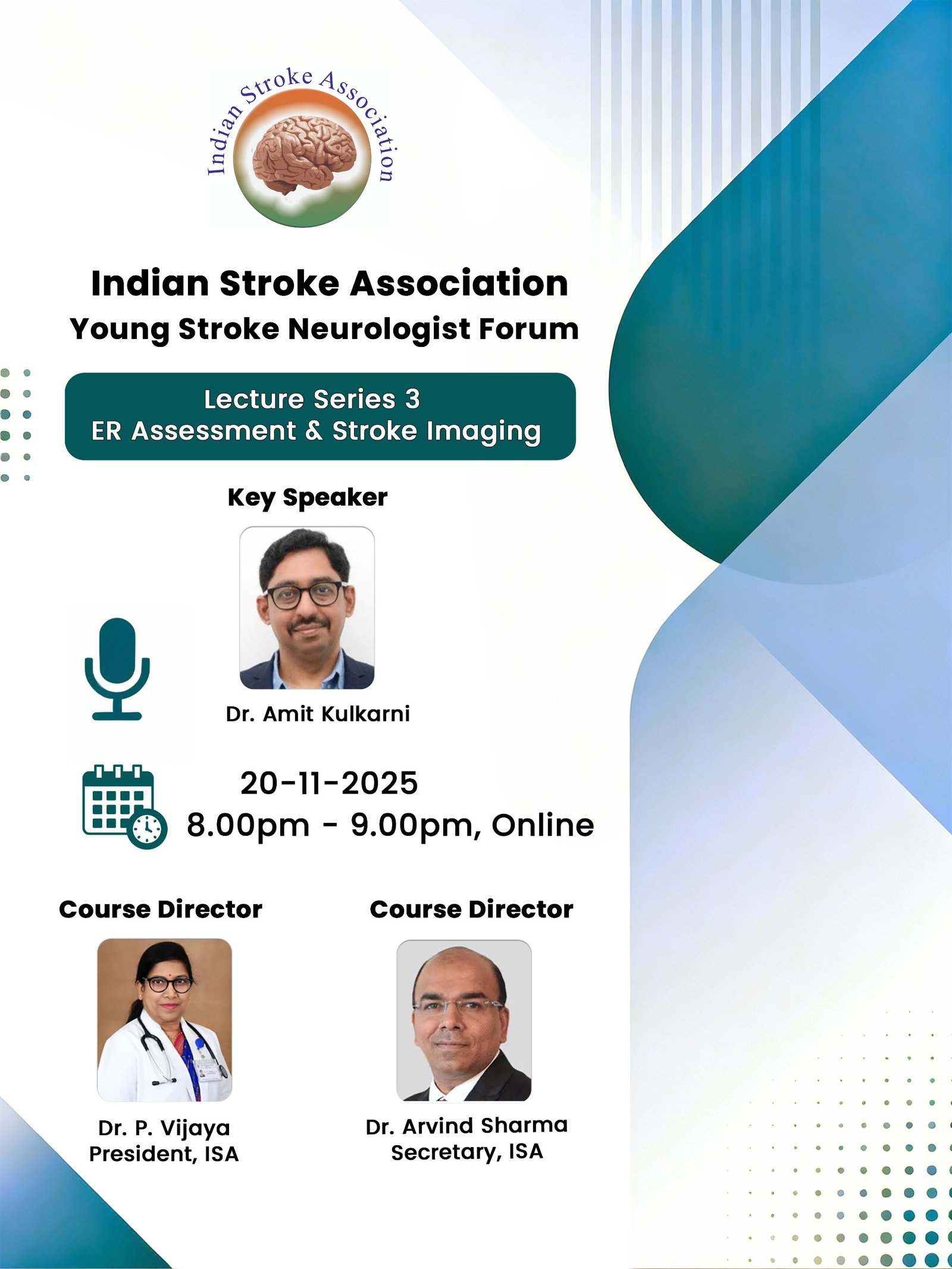
Key Speaker : Dr. Amit Kulkarani
Date : 20-11-2025
Time : 8:00 pm - 9:00 pm
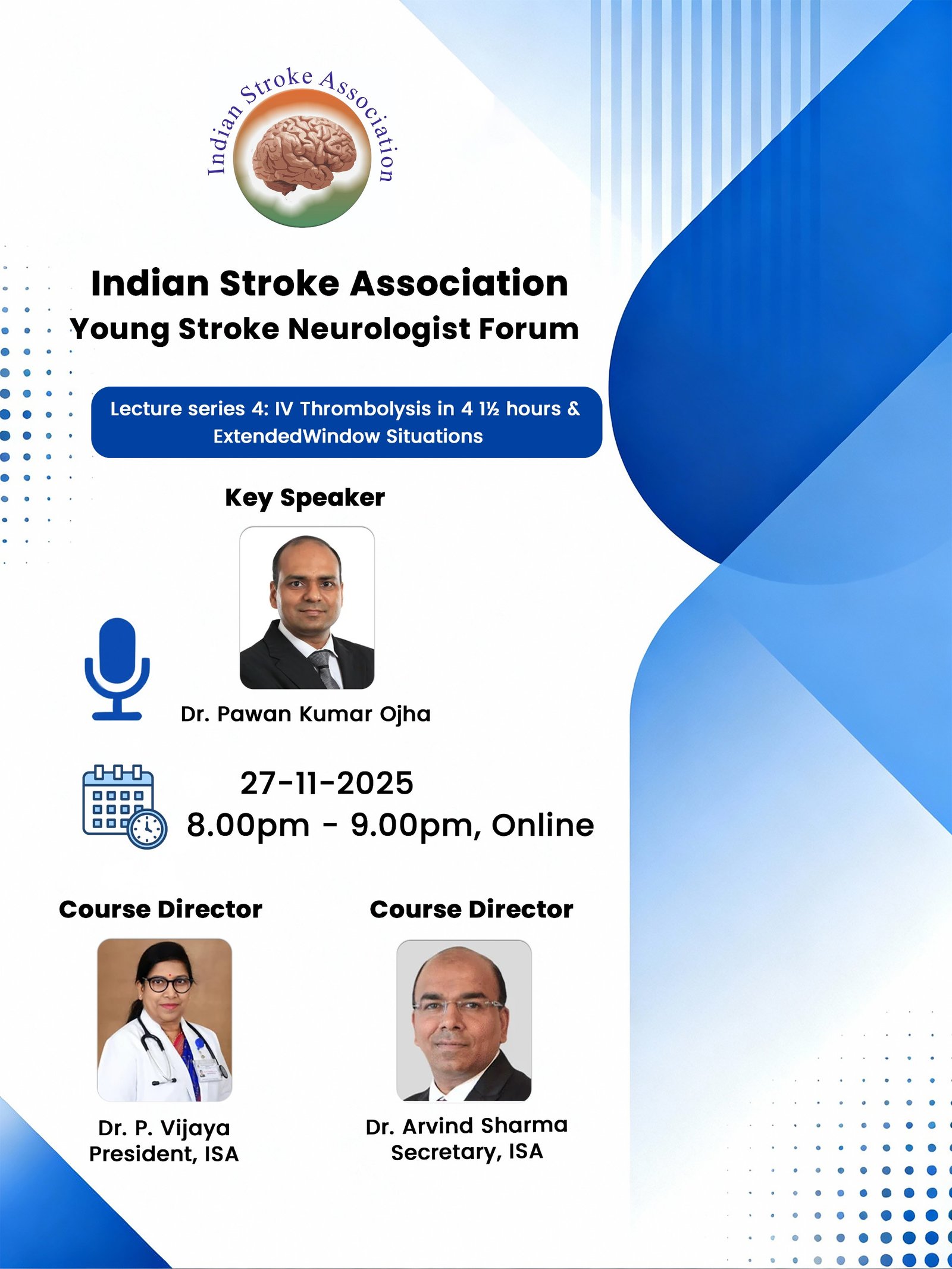
Key Speaker : Dr. Pawan Kumar Ojha
Date : 27-11-2025
Time : 8:00 pm - 9:00 pm
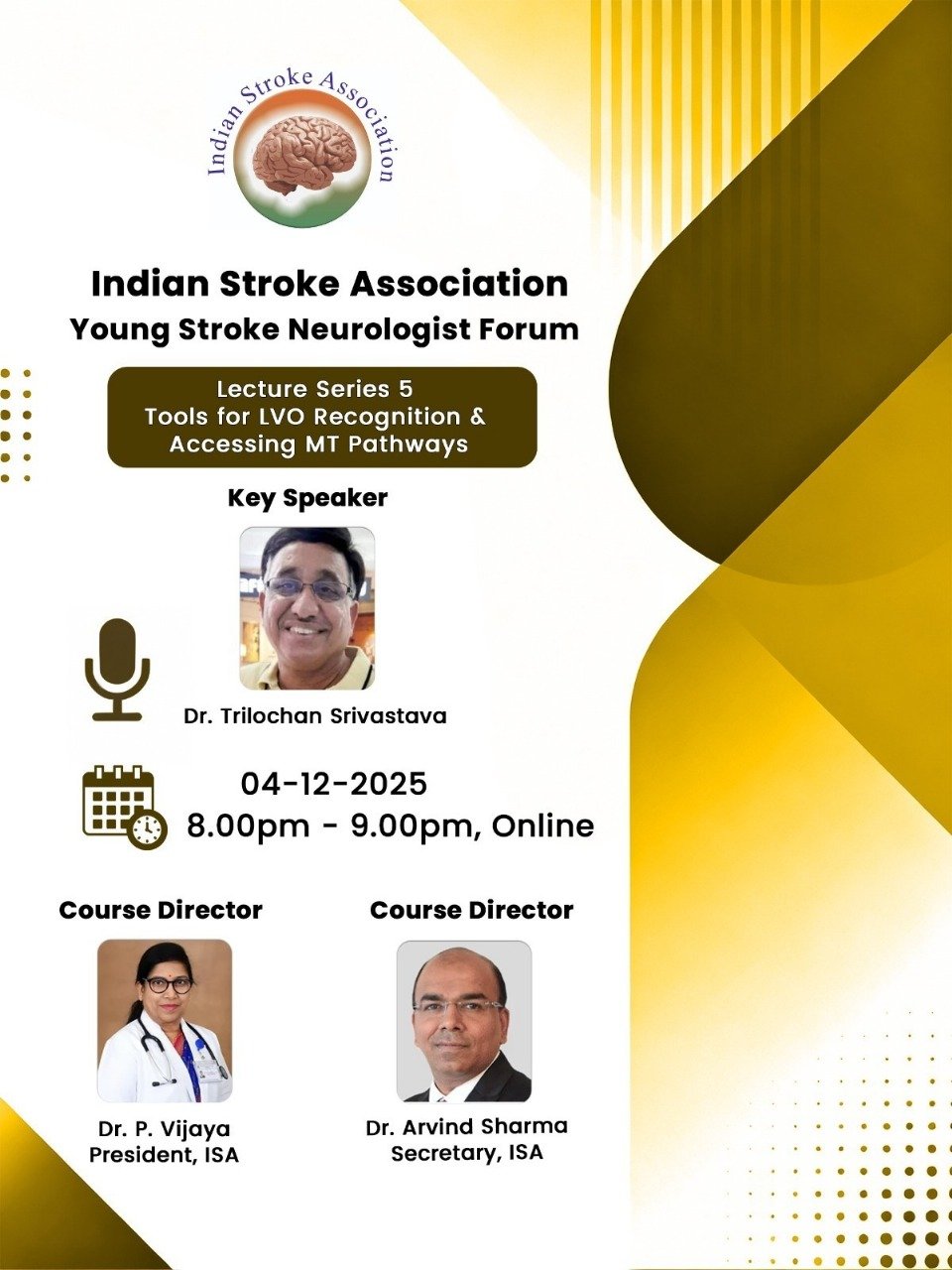
Key Speaker : Dr. Trilochan Srivastava
Date : 04-12-2025
Time : 8:00 pm - 9:00 pm
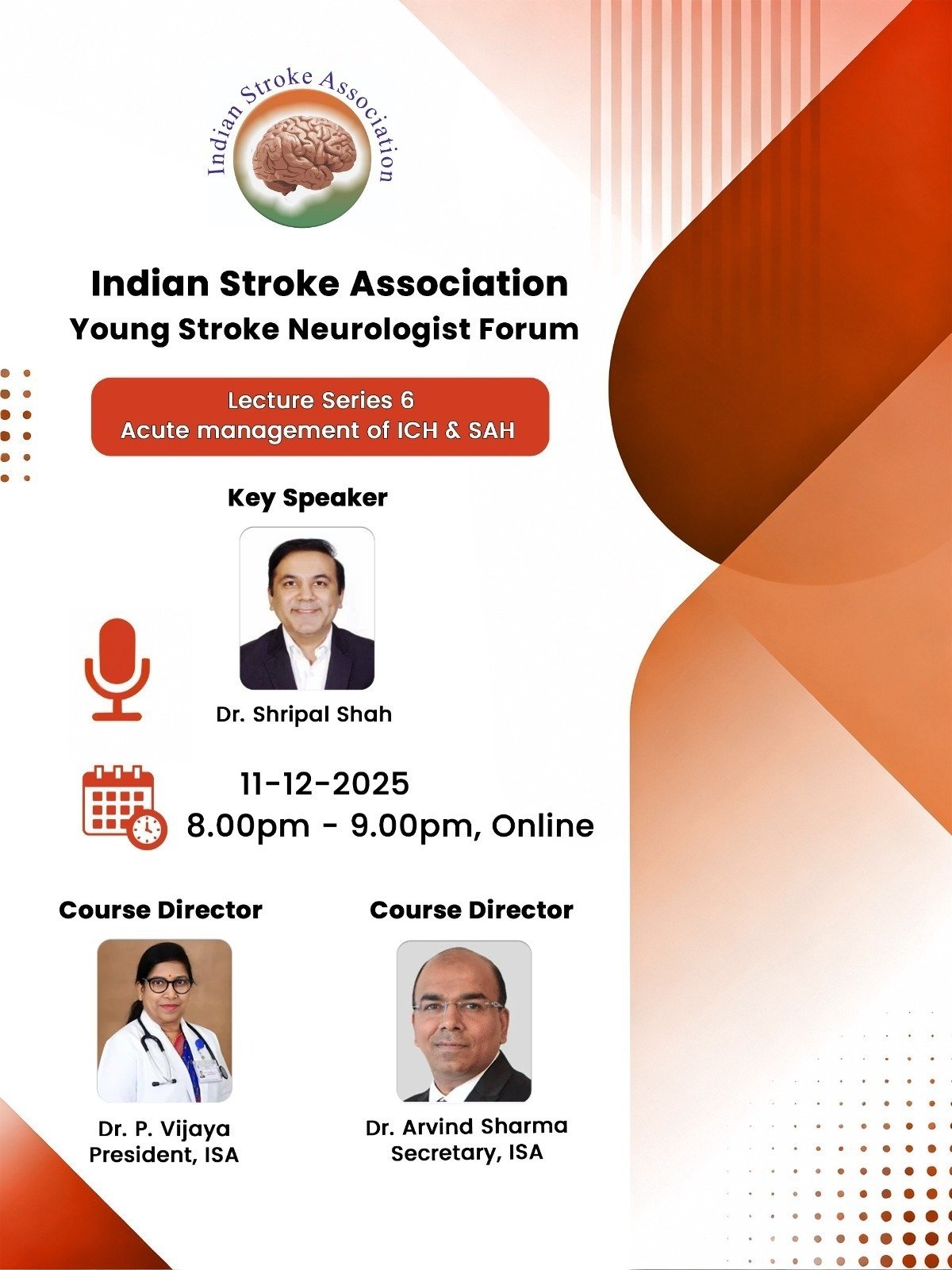
Key Speaker : Dr. Shripal Shah
Date : 11-12-2025
Time : 8:00 pm - 9:00 pm
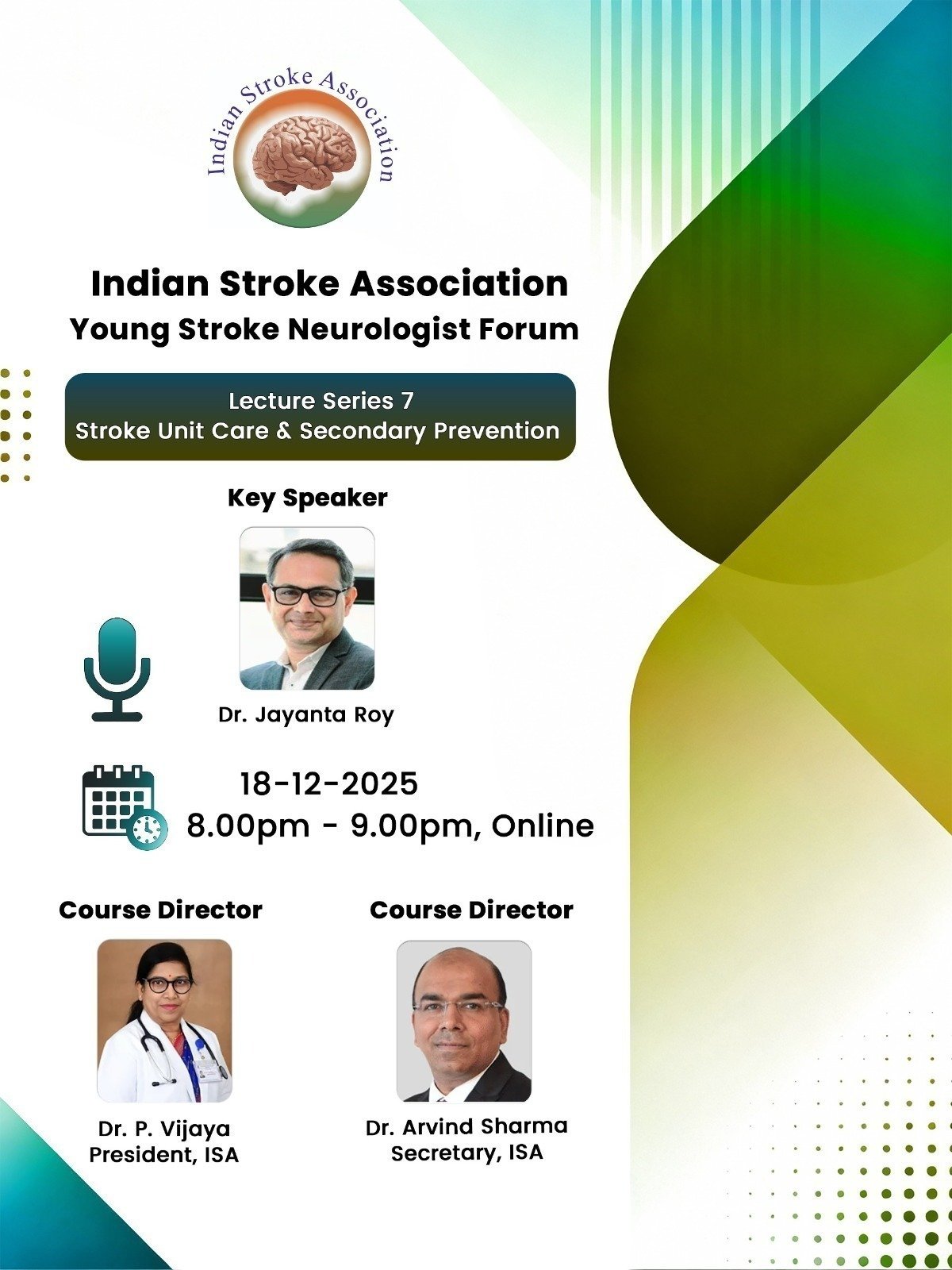
Key Speaker : Dr. Jayanta Roy
Date : 18-12-2025
Time : 8:00 pm - 9:00 pm
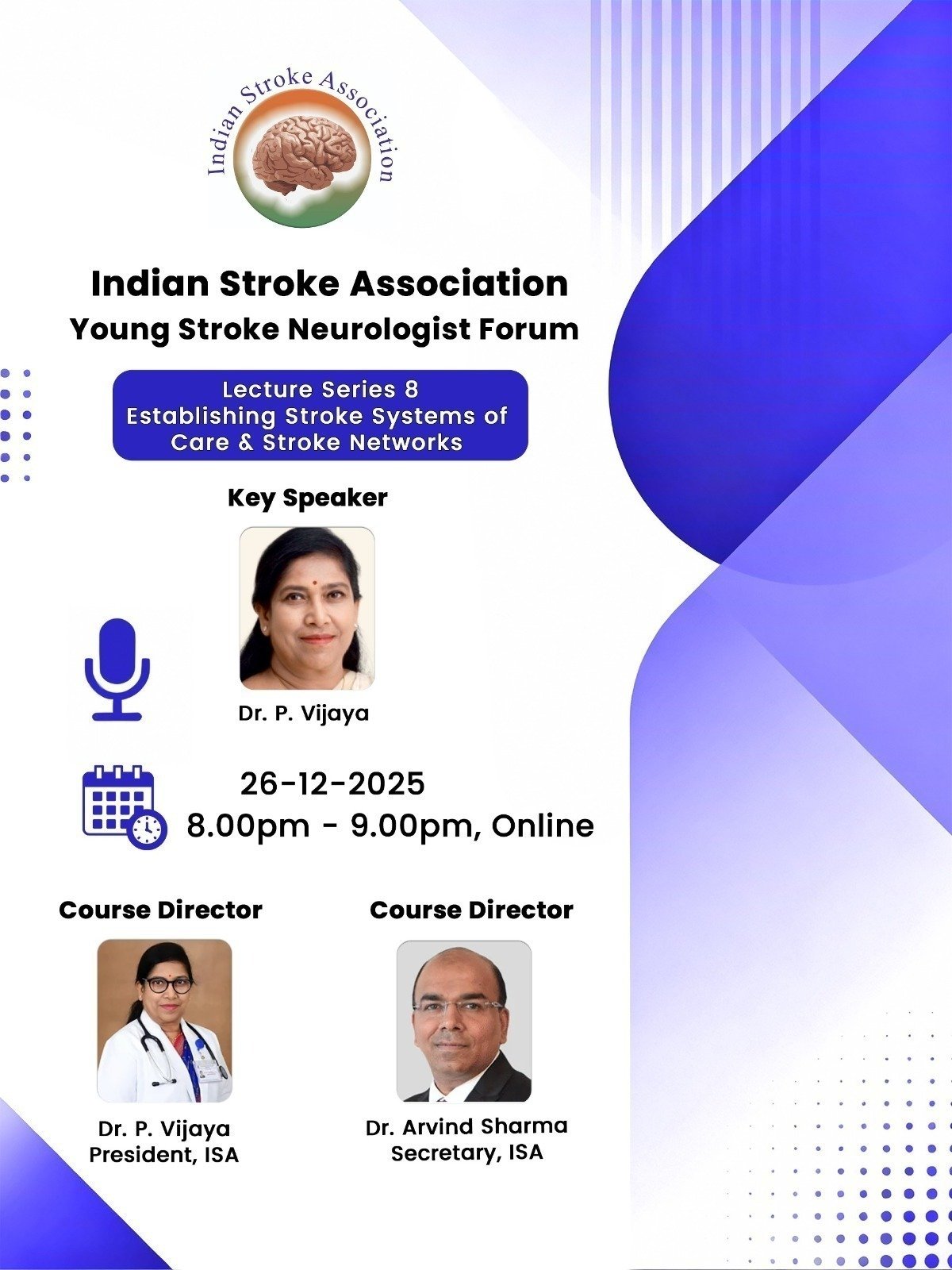
Key Speaker : Dr. P. Vijaya
Date : 26-12-2025
Time : 8:00 pm - 9:00 pm
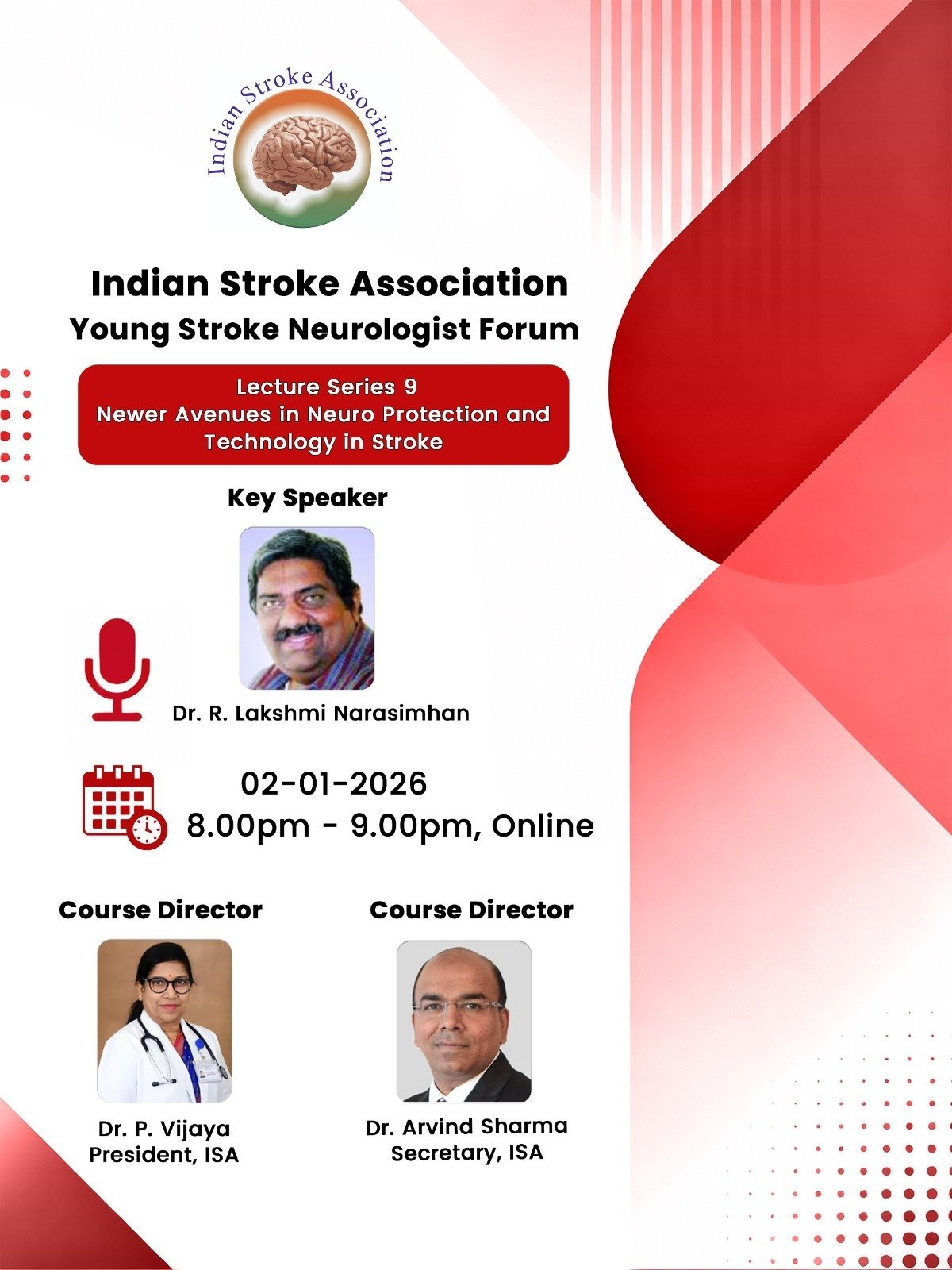
Key Speaker : Dr. R. Lakshmi Narasimhan
Date : 02-01-2026
Time : 8:00 pm - 9:00 pm
Indian Stroke Association activity pages from the live website, rendered in the ISA theme.
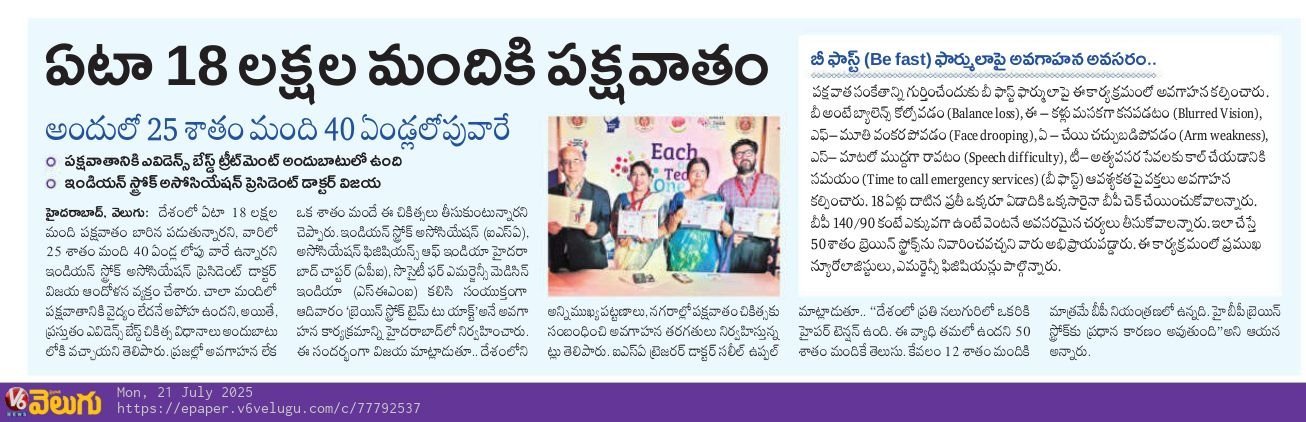
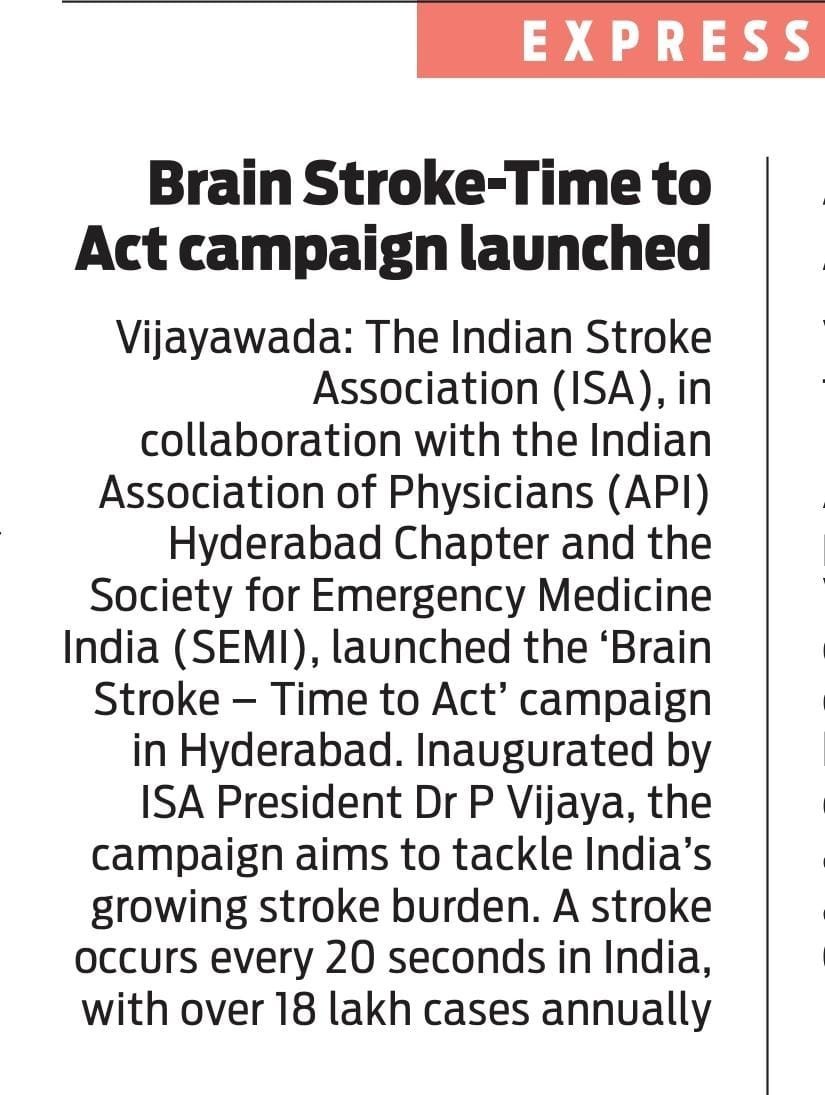
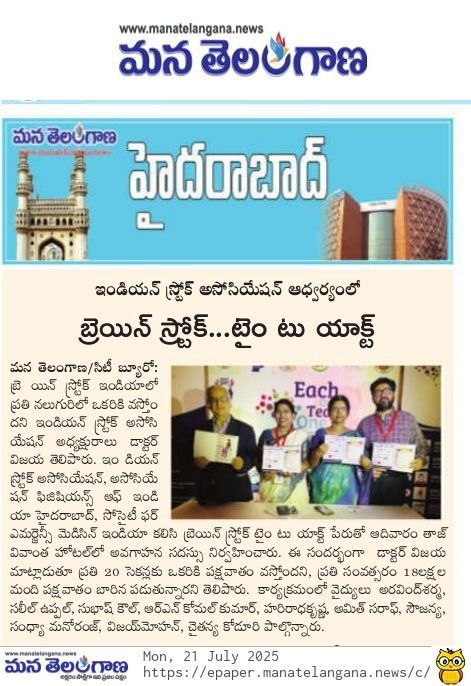
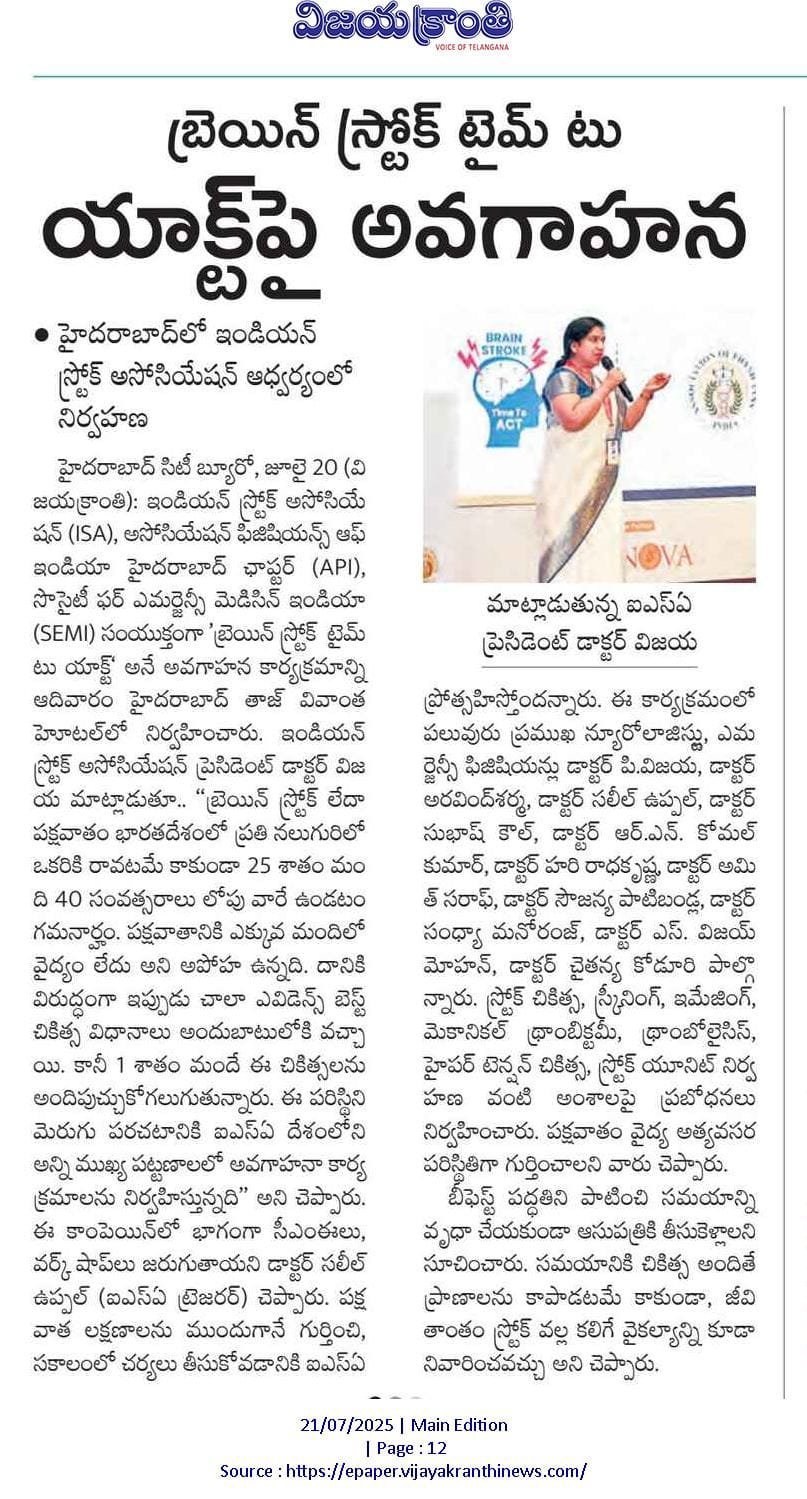
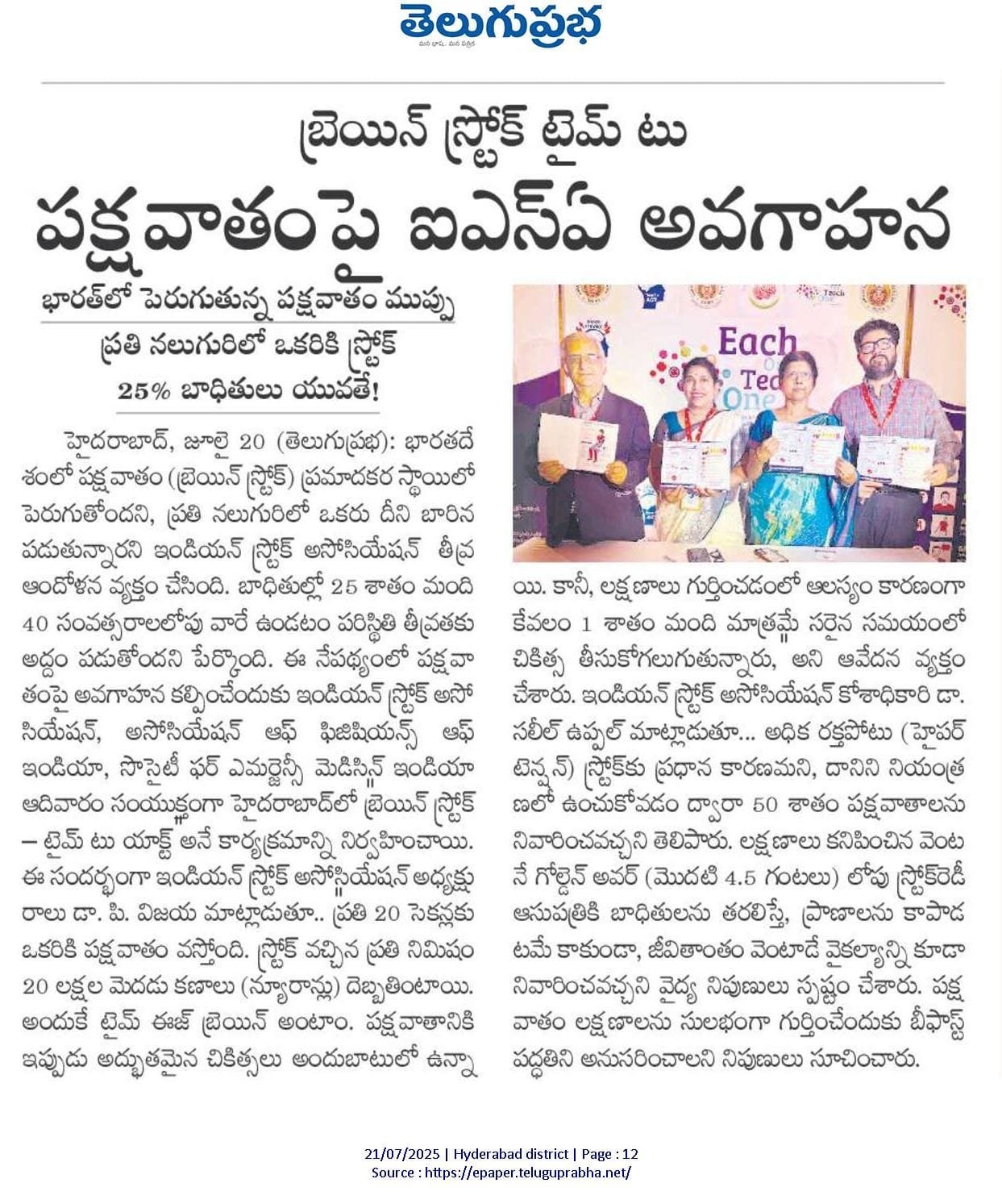
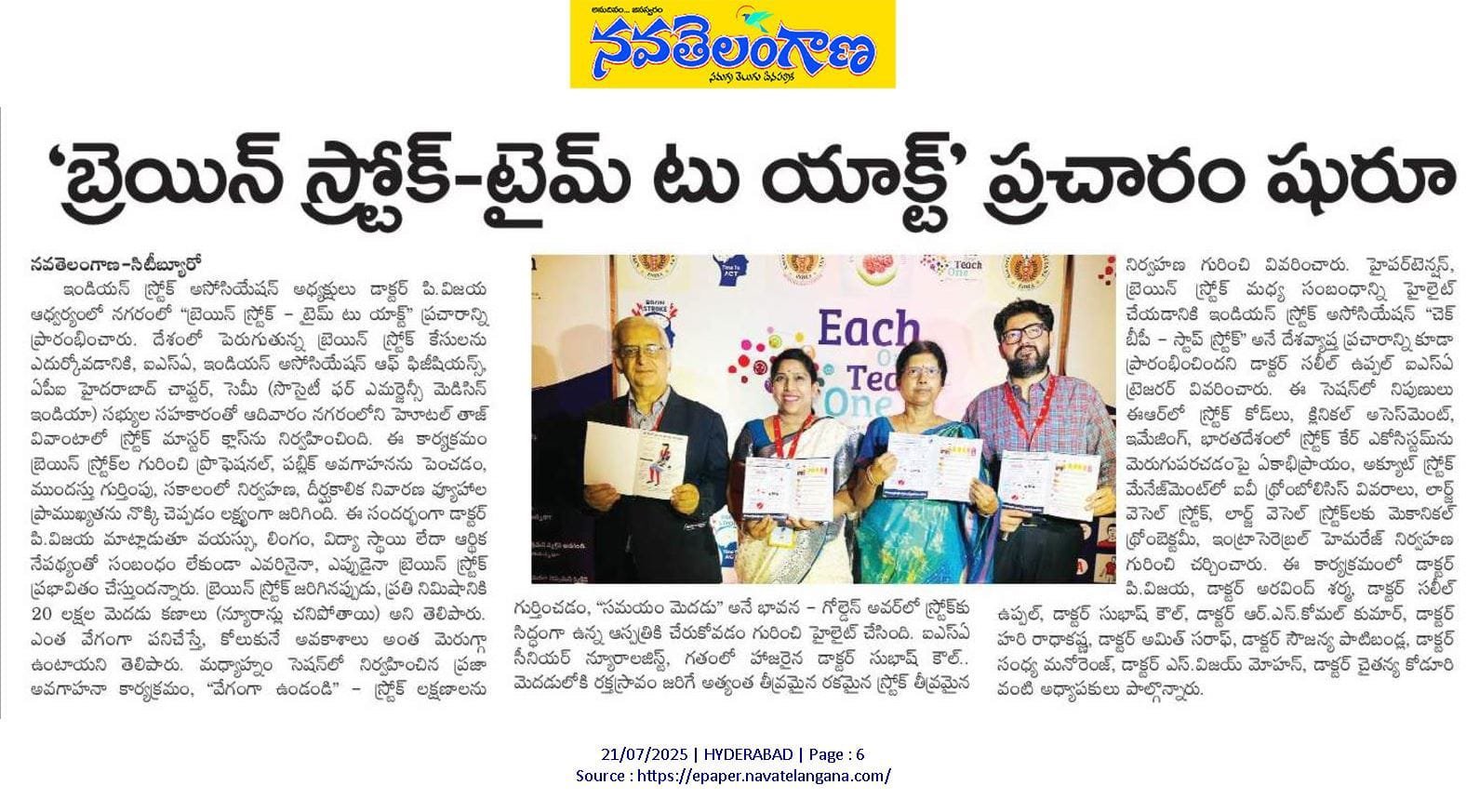
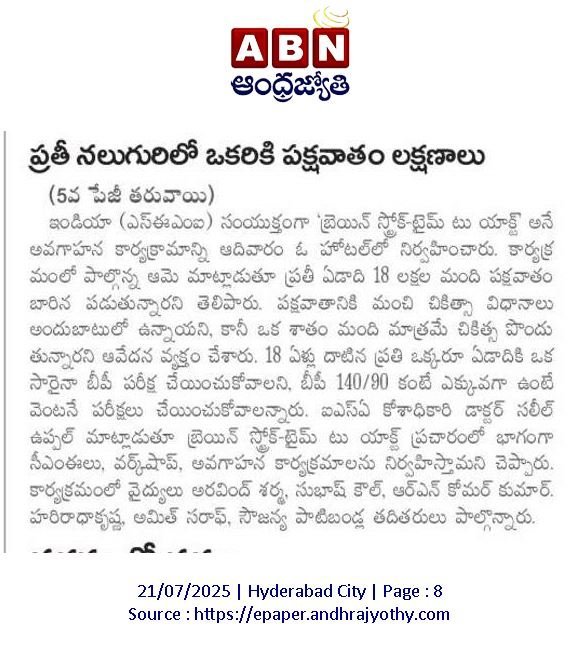
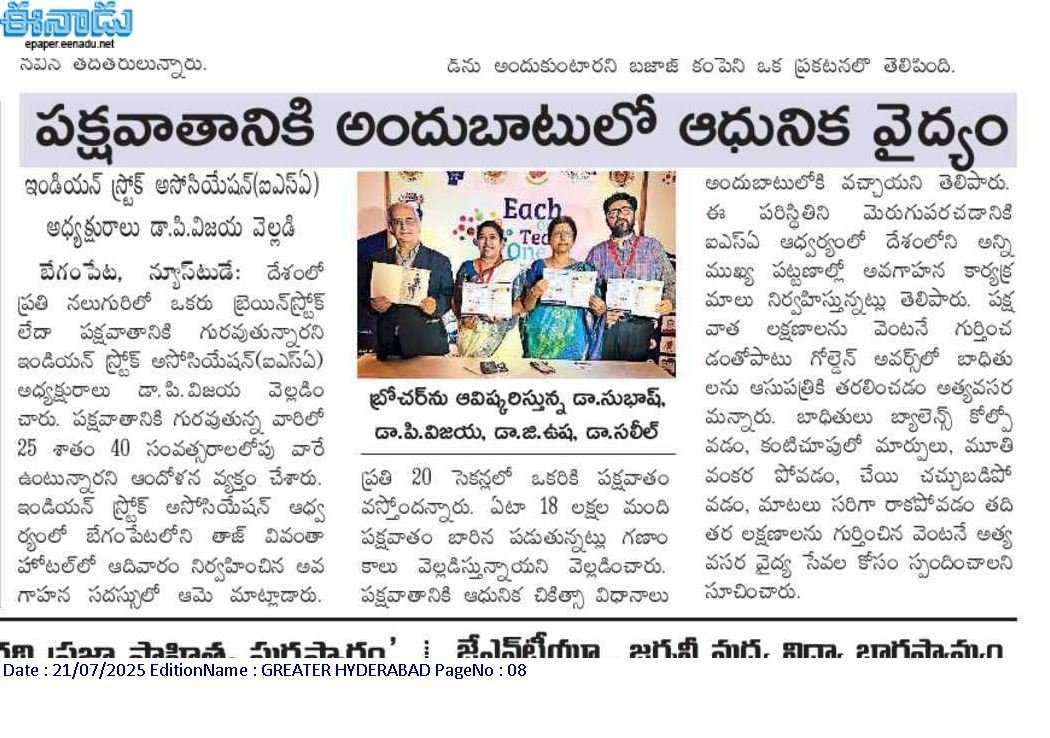
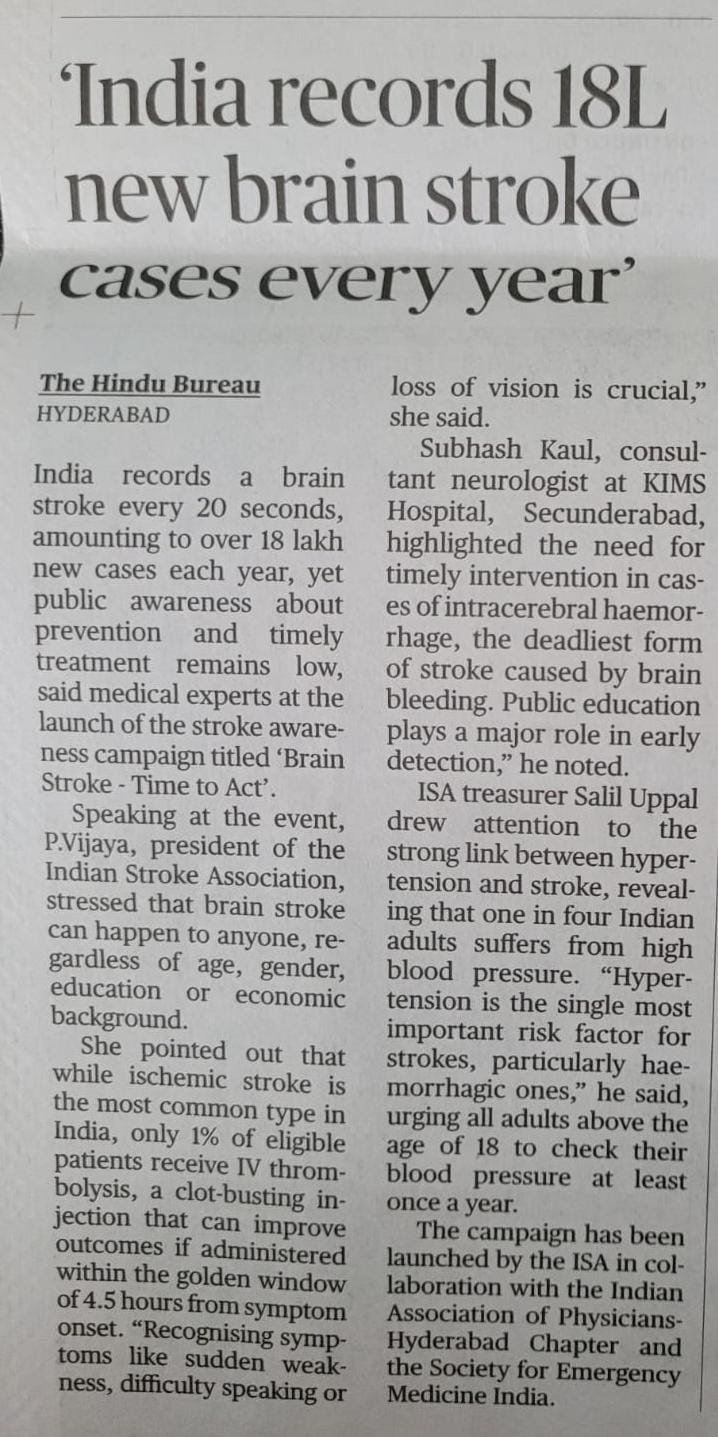
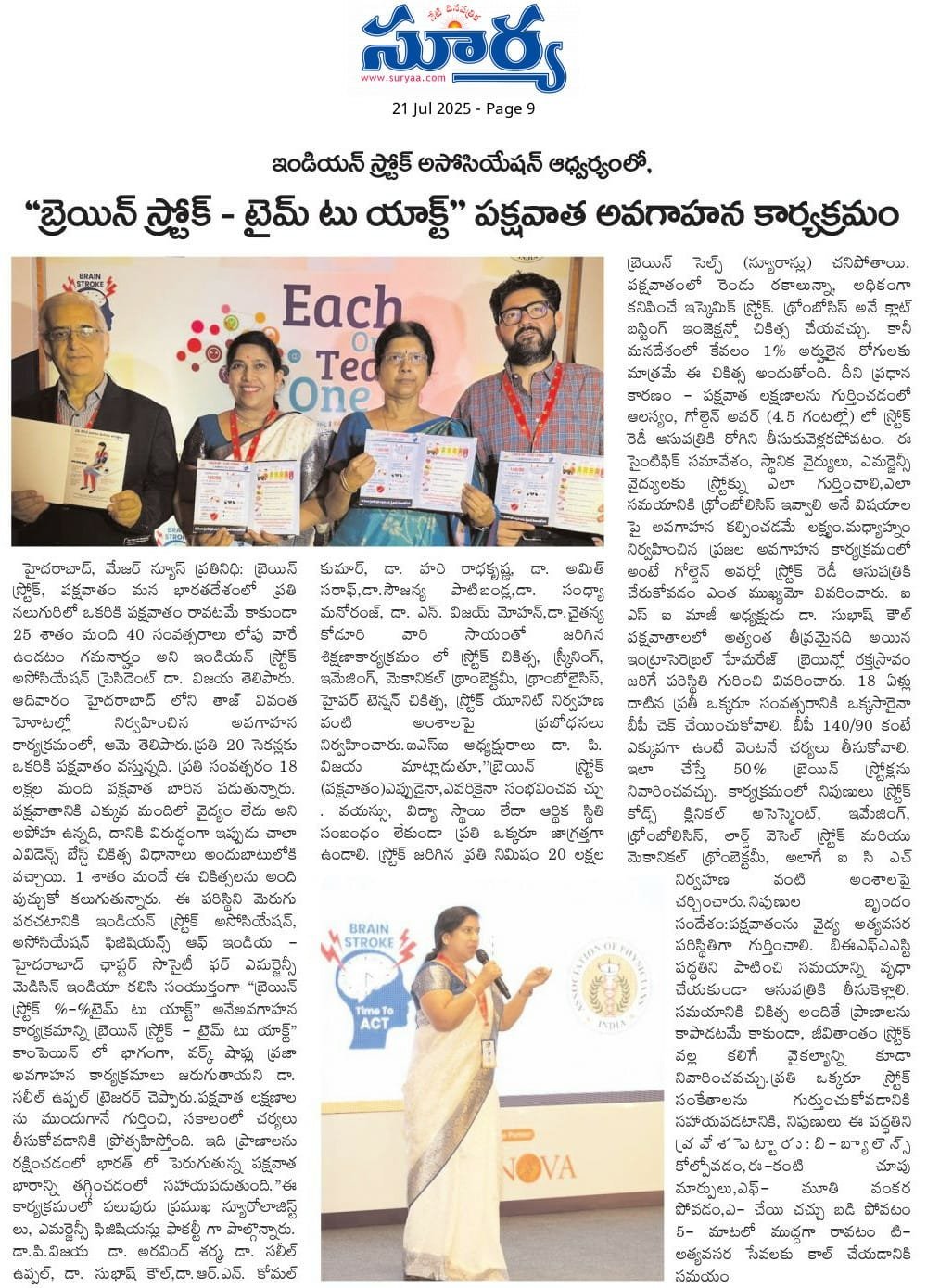
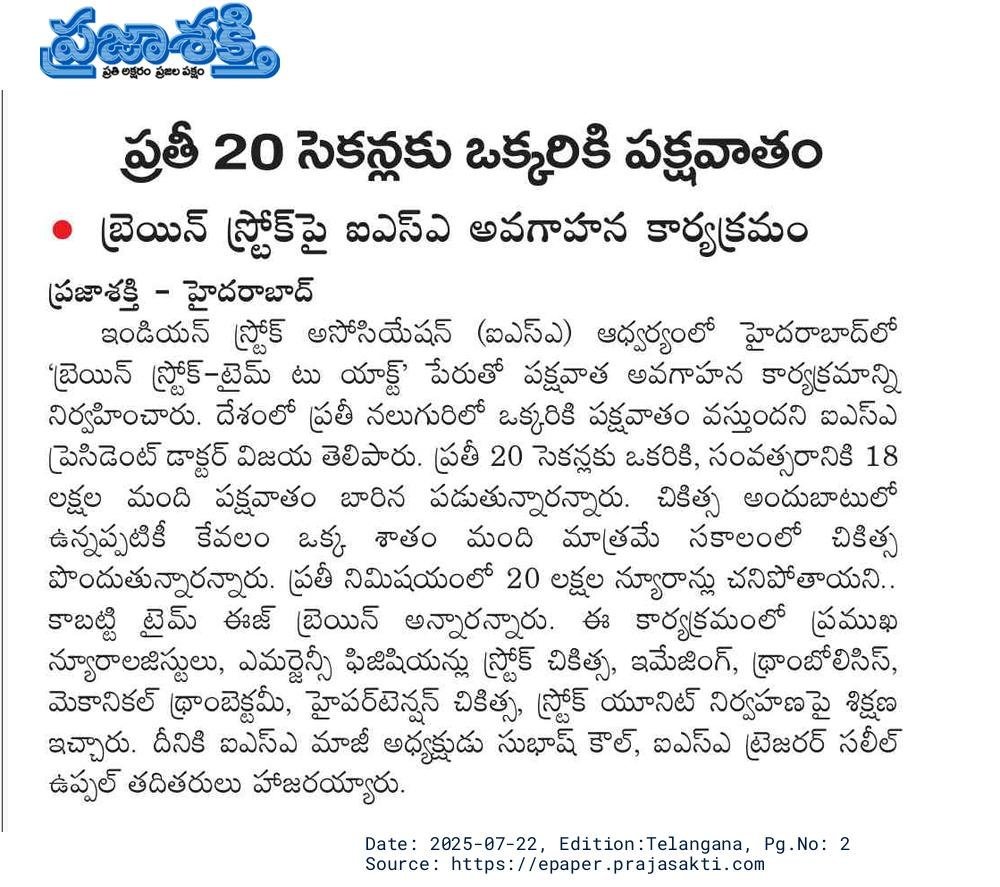
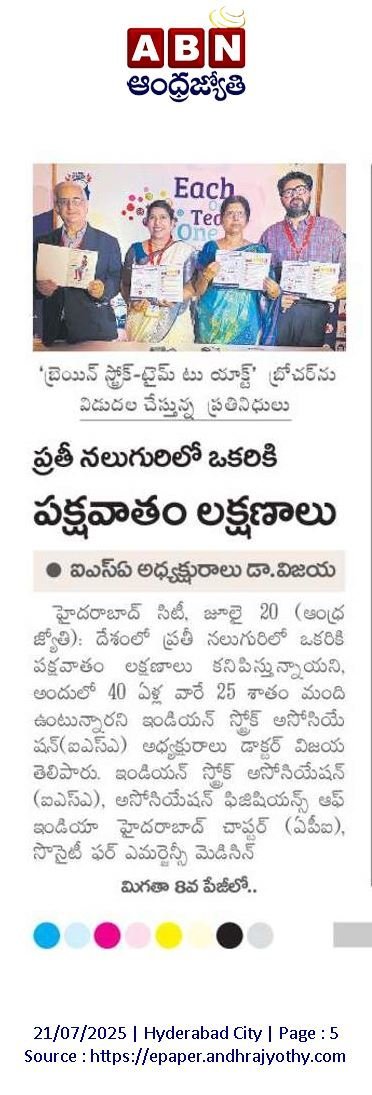
2025 – Check BP Stop Stroke
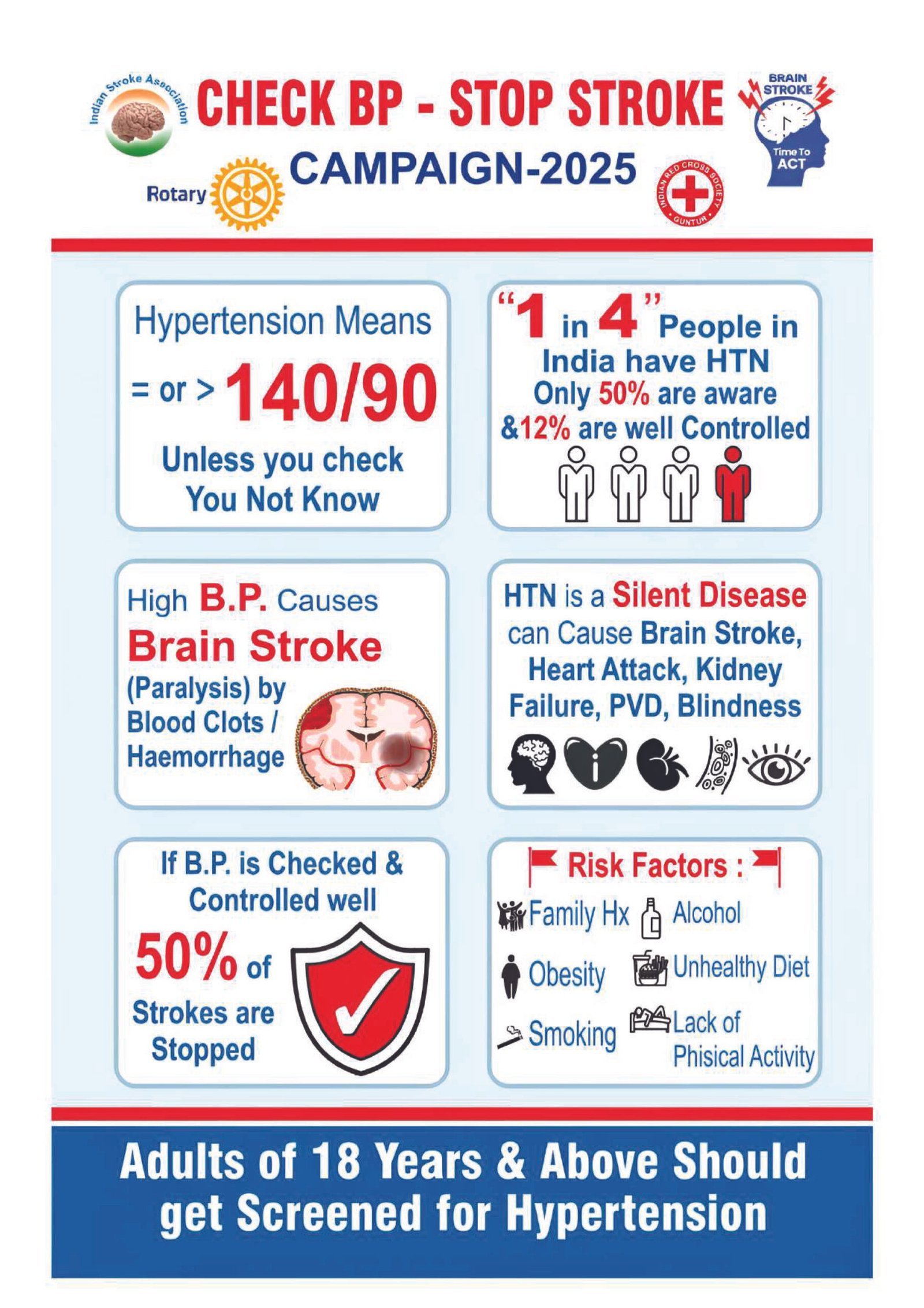
High blood pressure (Hypertension) is one of the most important – yet most silent – health risks faced by adults today.
It is one of the leading causes of brain stroke, heart attack, kidney failure, and blindness. In India, 1 in 4 adults has hypertension, but only half know about it. Regular BP screening is the only way to detect it early.
Uncontrolled BP can cause severe brain damage through blood clots or bleeding. The positive news: 50% of strokes can be prevented by checking and controlling blood pressure on time.
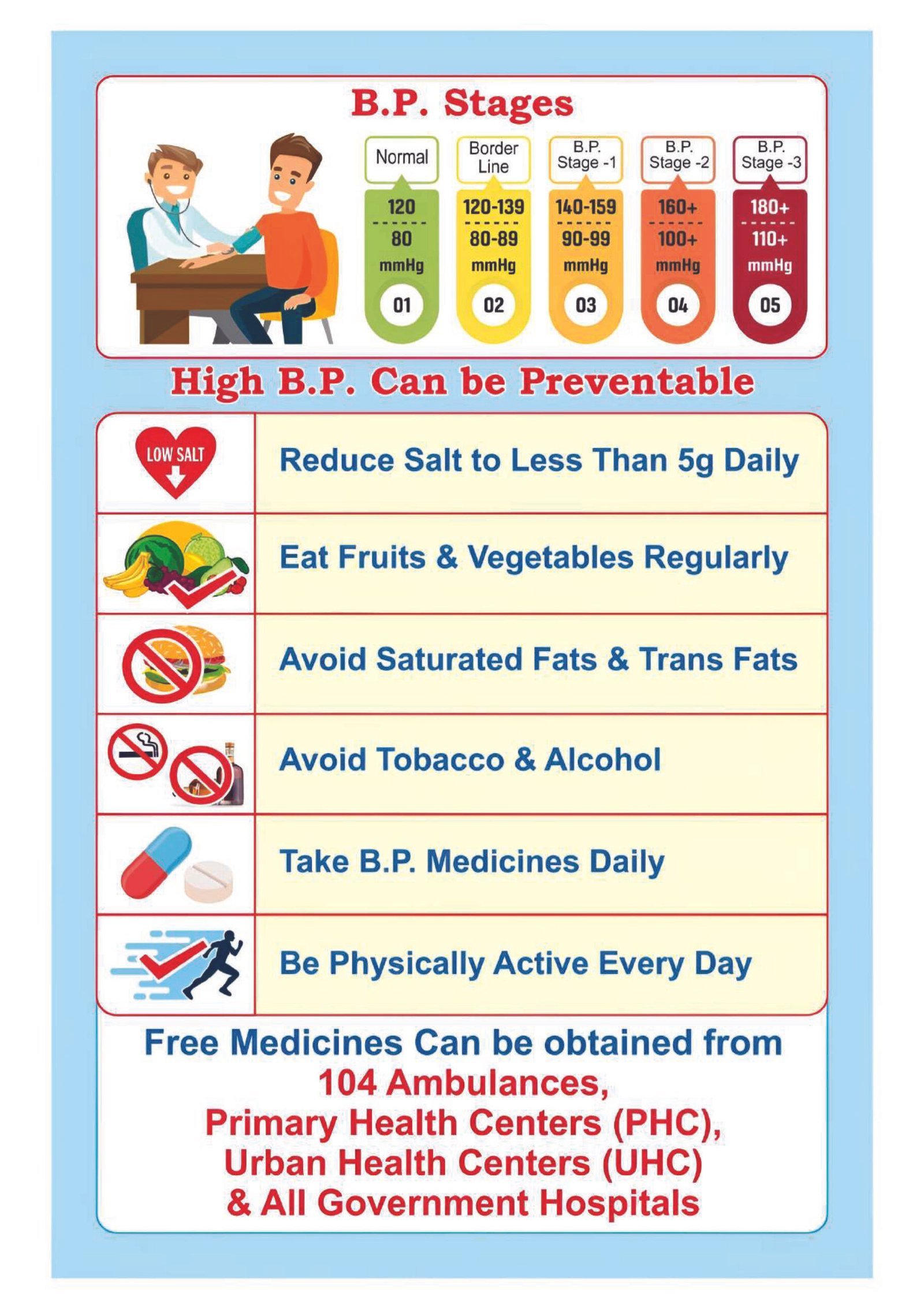
Common risk factors include family history, obesity, smoking, excess alcohol, high-salt diet, and lack of physical activity. Hypertension can be prevented by reducing salt intake, eating healthy, avoiding tobacco and alcohol, staying active, and taking BP medicines regularly.
Free BP screening and medicines are available at PHCs, UHCs, 104 ambulances, and government hospitals.
All adults aged 18+ should check their BP regularly — early detection saves lives.
2025 – Check BP Stop Stroke
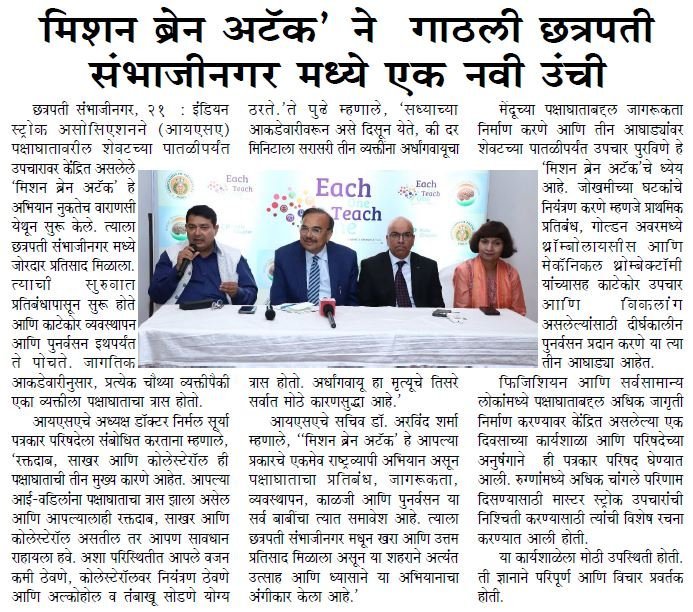
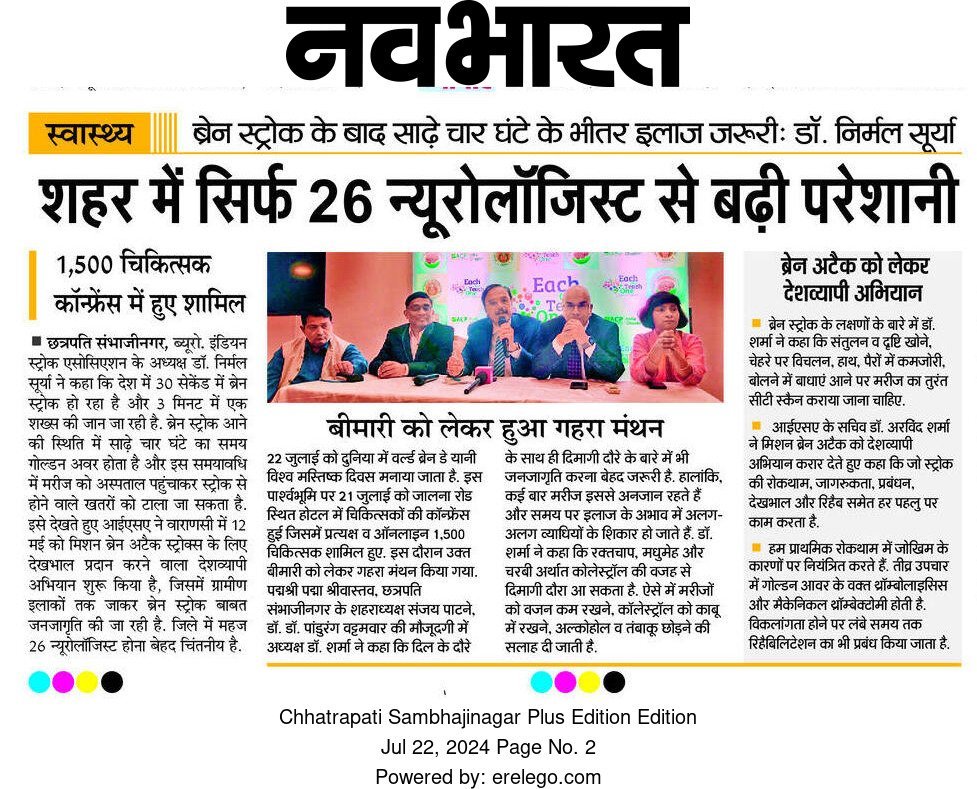
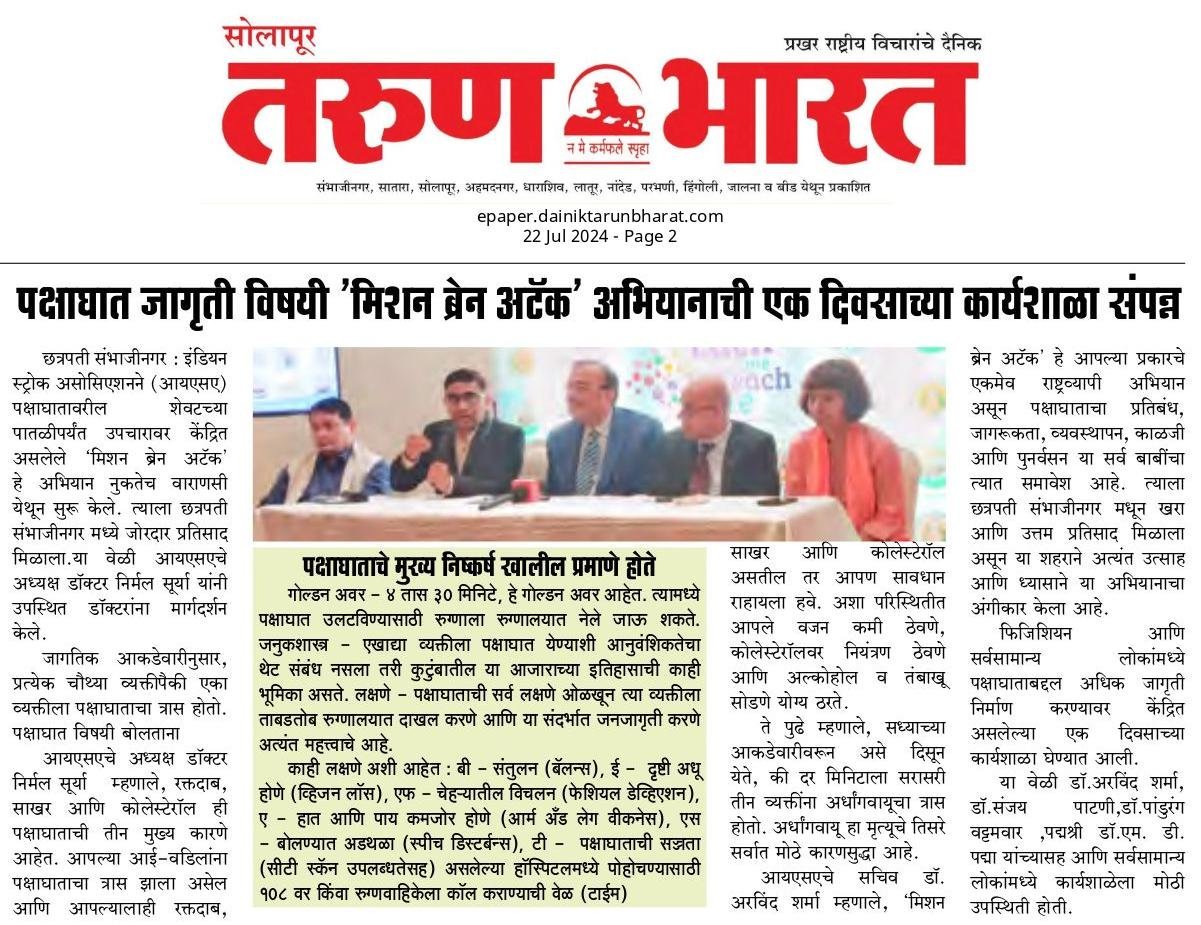
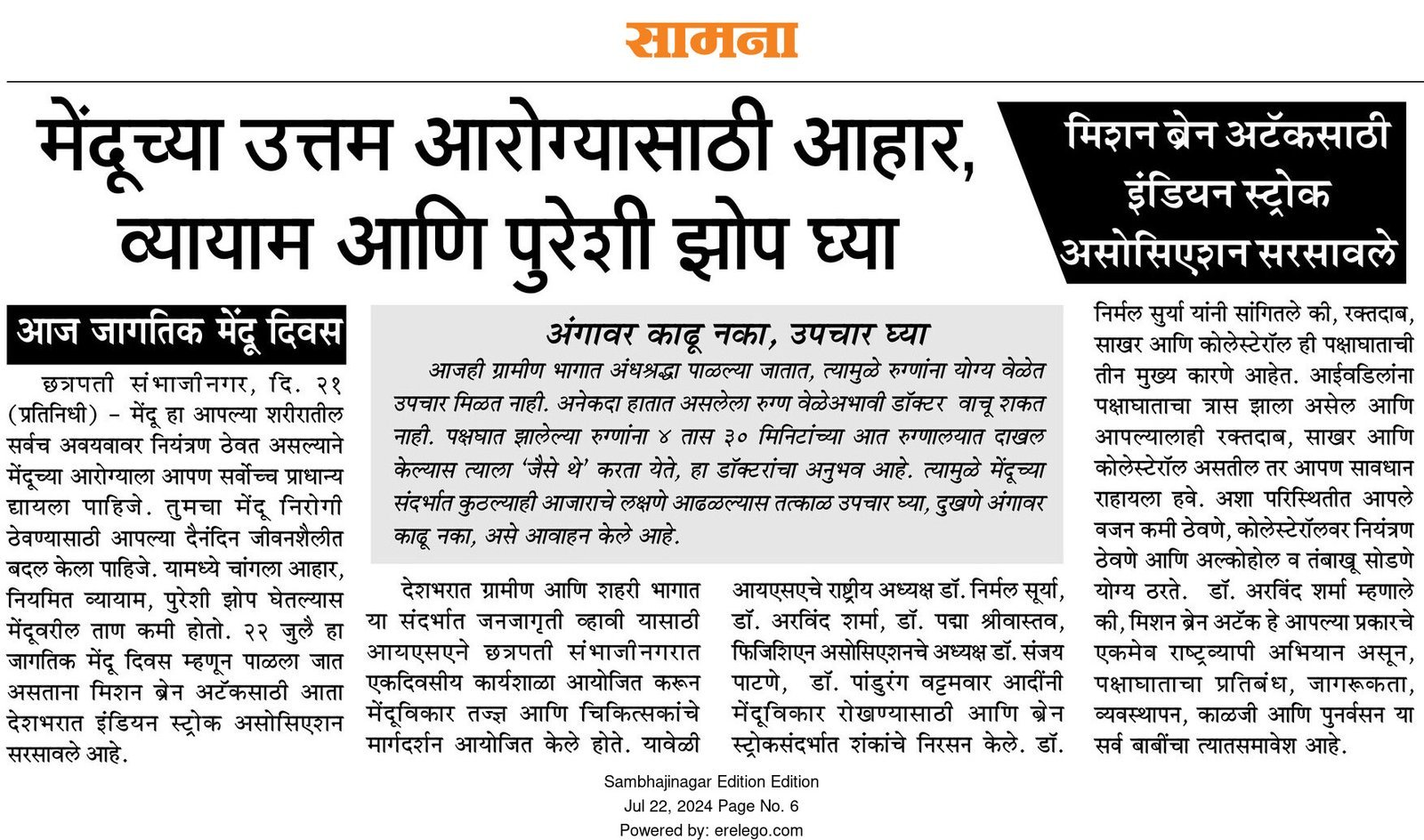
Mission Brain Attack
Mobile:8655566077
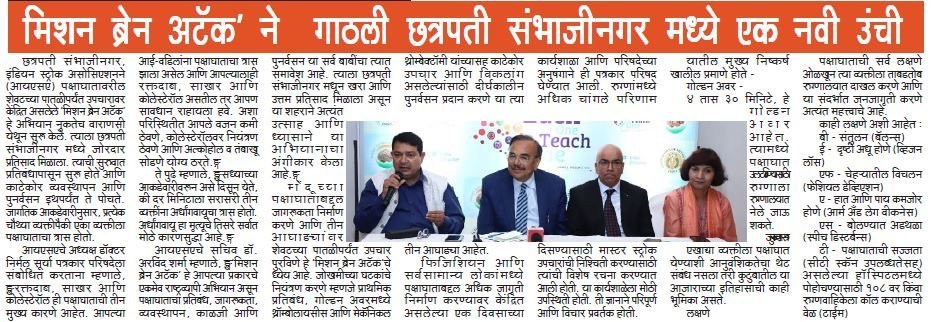
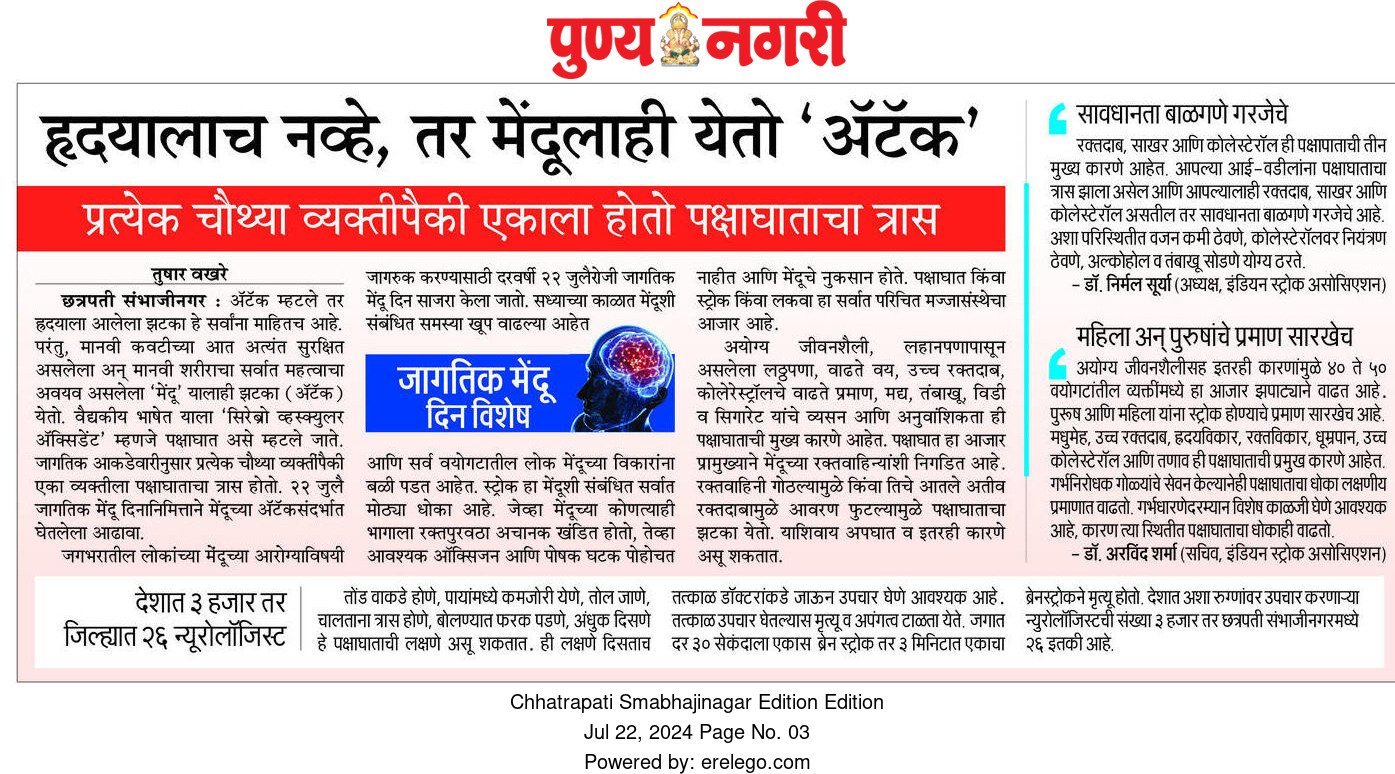
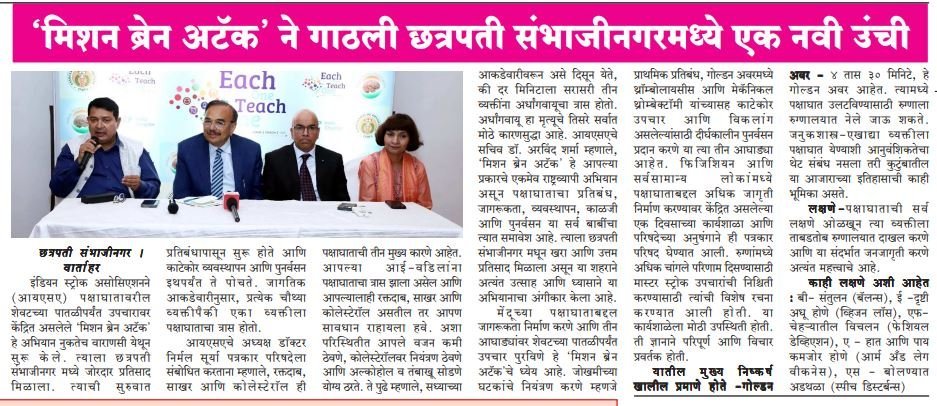
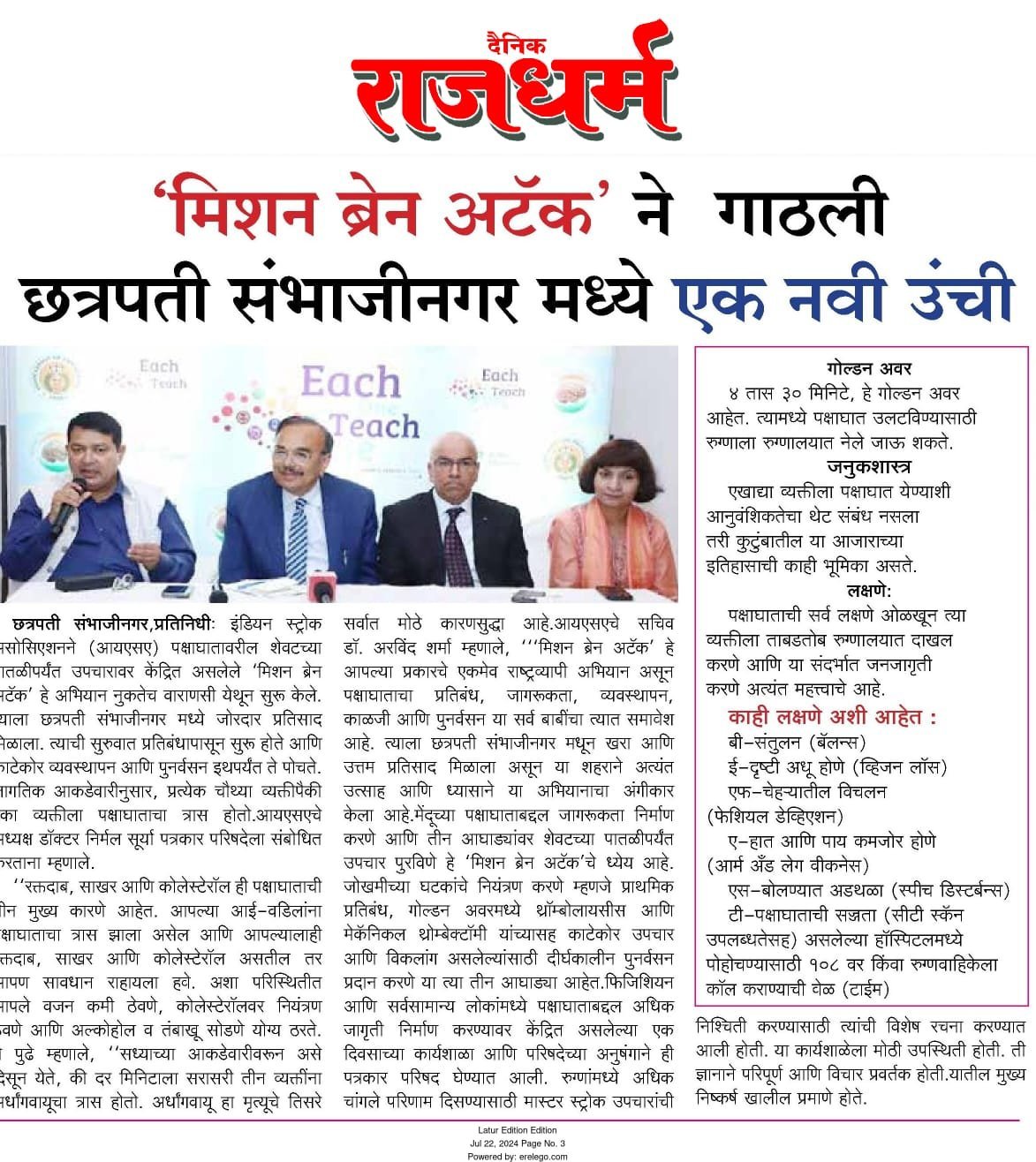
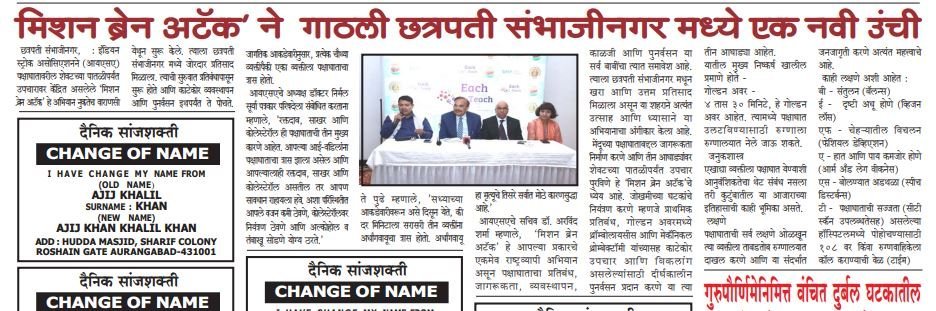
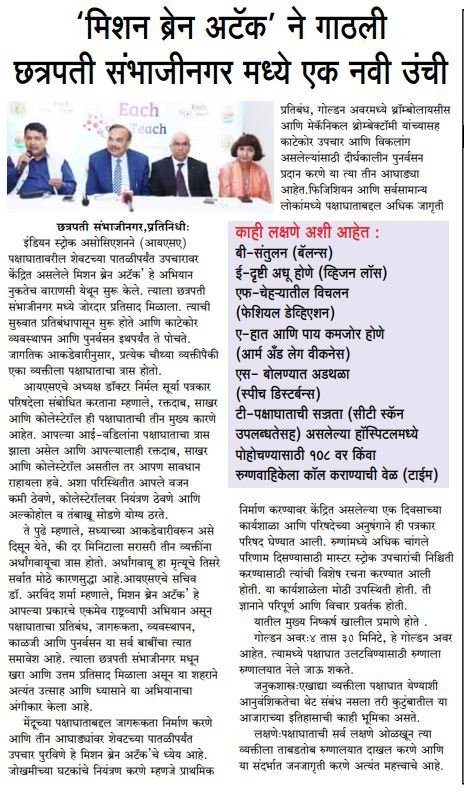
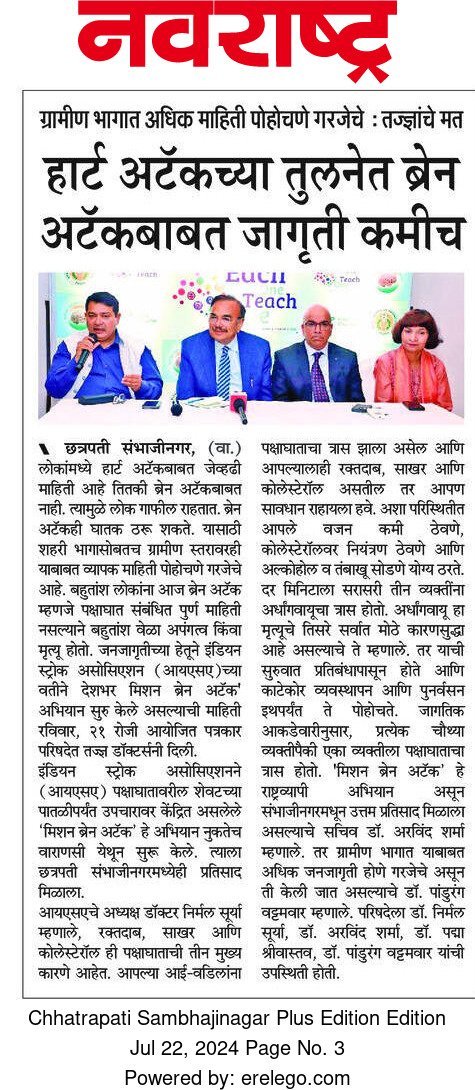
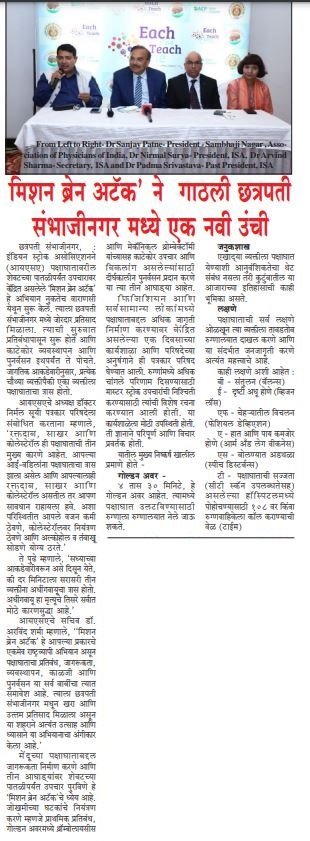
2024 – Stroke Awareness
The Indian Stroke Association (ISA) has been pushing scientific research and breakthroughs in the field of stroke and also relentlessly working to boost community and physicians awareness about the importance of early identification and intervention.
Mercury Nursing Home,
36, Pantheon Road, Egmore,
Chennai – 600 008.
Dr. Arvind Sharma,
H- 101, Red Avenue, Maple County 2, B/H Ornet Park,
Sindhu Bhavan Road. Thaltej
Ahmedabad – 380058
Gujarat
Marundeshwara Enterprises,
A4, Shanthi Apartments,
18, TTK 1st Cross Street, Alwarpet,
Chennai- 600 018.
India's largest professional stroke organisation, working relentlessly since 2002 to decrease the burden of stroke and minimise stroke disability.
The Indian Stroke Association (ISA) is the largest professional organization in India focused exclusively on stroke, established in 2002. ISA has been pushing scientific research and breakthroughs in the field of stroke while relentlessly working to boost community and physician awareness about the importance of early identification and intervention.
With an ever-increasing pressure of high stroke cases and the burden of high mortality and catastrophic disability, ISA brings together all contributors to combat this disease. The golden window for treatment is just 4.5 hours — and ISA’s mission is to ensure no Indian misses it.
Stroke is preventable. Stroke is treatable. Through awareness, science, and collective action, we can save millions of brains and lives across India.
To encourage scientific research in stroke and allied disciplines, fostering breakthroughs that improve diagnosis, treatment, and outcomes for stroke patients across India.
To promote, develop, and provide exchange of knowledge as well as technical cooperation between research institutions in India and collaborations with institutions abroad.
To conduct conferences, refresher courses, CMEs, lectures, seminars, and exhibitions related to stroke research, empowering the next generation of stroke specialists.
To propagate education and awareness about stroke in the general public, to apprise them about the latest developments in this field and help them make right decisions.
Dear Members of the Indian Stroke Association and Colleagues in Neurosciences, warm greetings to all.
It is a great honour and privilege to assume the responsibility of serving as the President of the Indian Stroke Association. I sincerely thank each one of you for the trust and confidence placed in me. Stroke is preventable. Stroke is treatable. Through awareness, science, and collective action, we can save millions of brains and lives across India.
Read Full Message →As the Secretary, it is my responsibility to ensure effective communication with all our ISA members. I would like to express my gratitude to each one of you for your continued support and dedication to our mission of stroke prevention, treatment, and rehabilitation across India.
I am pleased to inform you that our association has been actively engaged in various initiatives aimed at raising awareness about stroke prevention.
Read Full Message →Memorandum of Association & Bye-Laws — the legal and procedural foundation of the Indian Stroke Association.
The name of the Association shall be the Indian Stroke Association (ISA), registered under the Tamil Nadu Societies Registration Act, 1975. Date of formation: 19th July, 2002.
Registered Office: 36, Pantheon Road, Egmore, Chennai – 600 008.
Life Members: A medical expert with post-doctoral qualification DM/DNB Neurology engaged in medical practice in stroke care, on payment of Rs. 3,000/-
Associate Members: A medical practitioner with a graduate degree or diploma in any general speciality or allied specialities, on payment of Rs. 3,000/-. They do not have voting rights and are not eligible for office bearer posts.
Every application for membership shall be recommended by at least two Members of ISA. The Executive Committee has absolute power to admit or reject any application.
The Executive Committee shall comprise the following:
Tenure: President and Vice-President/President Elect — one year. Secretary, Treasurer, Editor and Executive Committee members — three years.
Candidates applying for any post in the Executive Committee must have been a Life Member for at least 5 years. Candidates for Vice-President/President Elect must have served in the Executive Committee for at least one term (3 years).
The Annual General Body Meeting of ISA shall be held on the occasion of the annual conference. The quorum for all meetings of the General Body shall be 10% of all registered members entitled to vote. Only Life Members have voting rights.
Notice for General Body Meetings shall be given at least 21 days before the meeting date. Extraordinary General Meetings may be convened at the request of not less than one-third of members.
The financial year of ISA shall be from 1st April to 31st March. Accounts shall be audited every year by a Chartered Accountant appointed at the Annual General Meeting.
The Annual Conference of ISA shall be organized every year between January and March. The organizers shall contribute 25% of the registration fee to ISA and 50% of any surplus funds after the conference.
Upon winding up or dissolution, after satisfaction of all debts and liabilities, any remaining property shall be transferred to another institution having similar objects — not distributed among members.
A Special Resolution requires a majority of not less than three-fourths (3/4) of members entitled to vote, present at a General Body Meeting with at least 21 days' notice. Special resolutions are required to amend objectives, amend Bye-Laws, change the name, or dissolve the Association.
Document: Memorandum of Association and Bye-Laws of Indian Stroke Association — Registered under Tamil Nadu Societies Registration Act, 1975. Registration No. 307/2002.
Meet the ISA Executive Committee 2026–2027 — dedicated leadership driving stroke care advancement across India.
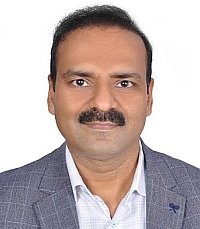
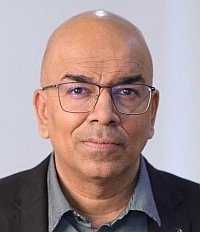
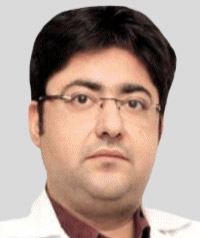
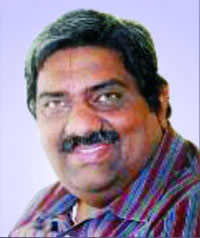
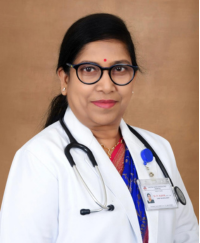

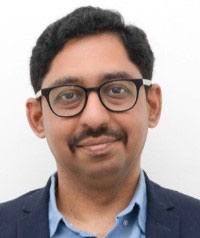
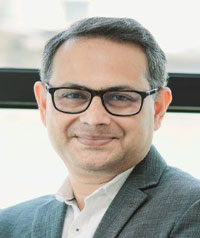
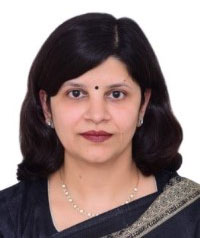
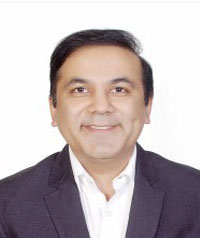
ISA is guided by an esteemed panel of international stroke experts bringing global best practices to strengthen stroke care in India.
ISA is guided by an esteemed panel of international stroke experts from across the world, bringing global expertise and best practices to strengthen stroke care in India.
Leadership message from Dr. Vikram Huded, Indian Stroke Association 2026–2027.
Dear Members of the Indian Stroke Association and Colleagues in Neurosciences,
Warm greetings to all.
It is a great honour and privilege to assume the responsibility of serving as the President of the Indian Stroke Association. I sincerely thank each one of you for the trust and confidence placed in me. I also take this opportunity to acknowledge and appreciate the remarkable work done by our past presidents and leaders who have built a strong and vibrant organization dedicated to improving stroke care in India.
Stroke continues to be one of the leading causes of death and disability in our country. Yet, the encouraging reality is that stroke is both preventable and treatable when recognized early and managed appropriately. Every day, as clinicians and neuroscientists, we witness how timely recognition and intervention can change the course of a patient's life — saving not only the brain, but also the dignity, independence, and future of families.
Despite remarkable scientific advances, the challenge before us in India remains substantial. According to recent data from ICMR studies, intravenous thrombolysis is delivered in less than 5% of stroke patients, and mechanical thrombectomy in less than 1%. In contrast, nearby developed countries such as Singapore have treatment rates approaching 30%. These numbers remind us that the science already exists — our responsibility now is to ensure that this science reaches every patient who needs it.
With this perspective, the focus during my tenure will be on awareness, education, collaboration, and action to strengthen stroke care across India.
One of the central initiatives during this year will be "Save the Brain."
The message is simple, clear, and powerful:
Stroke is preventable. Stroke is treatable.
Through this national initiative, we aim to improve awareness among the general public as well as physicians who may not yet fully recognize the urgency of stroke care. Public education, physician engagement, and collaborative efforts across healthcare systems will be key components of this initiative. By spreading the message that "Time is Brain," we hope to ensure that more patients reach hospitals in time to receive life-saving treatments.
The coming year also marks the centenary of cerebral angiography, first performed in 1927 by the visionary neurologist Egas Moniz. This landmark discovery transformed our understanding of the cerebral circulation and laid the foundation for modern neurovascular imaging and intervention.
To commemorate this historic milestone in neuroscience, the Indian Stroke Association plans to organize 100 Continuing Medical Education (CME) programs across India. These programs will strengthen academic exchange, encourage multidisciplinary collaboration, and inspire the next generation of neurologists, neurosurgeons, neuroradiologists, stroke specialists and Neurointerventionists.
India stands at an important moment in its history as we move toward becoming a developed nation by 2047. Strengthening healthcare systems and reducing the burden of diseases such as stroke will be essential in achieving this vision.
The Indian Stroke Association will continue to work toward improving stroke prevention, public awareness, timely treatment, and rehabilitation across the country. However, this mission cannot be achieved by individuals alone. It requires the collective strength, wisdom, and commitment of the entire neuroscience community.
I warmly invite all ISA members, neurologists, neurosurgeons, neuroradiologists, Neurointerventionists, physicians, nurses, emergency teams, and allied healthcare professionals to join hands in this mission. Together, we can build stronger stroke systems of care, empower young clinicians, and make a meaningful difference in the lives of millions of Indians.
Stroke is preventable. Stroke is treatable. Through awareness, science, and collective action, we can save millions of brains and lives across India.
Leadership message from Dr. Arvind Sharma, Indian Stroke Association.
Dear Esteemed Indian Stroke Association (ISA) Members,
As the Secretary, it is my responsibility to ensure effective communication with all our ISA members.
Firstly, I would like to express my gratitude to each one of you for your continued support and dedication to our mission of stroke prevention, treatment, and rehabilitation across India. Your commitment plays a vital role in our collective efforts to combat stroke-related challenges in our communities.
I am pleased to inform you that our association has been actively engaged in various initiatives aimed at raising awareness about stroke prevention. From organizing educational campaigns to facilitating training programs for healthcare professionals, we have been striving to make a positive impact on the landscape of stroke care in our country.
In line with our commitment to promoting excellence in stroke research and clinical practice, we have achieved long cherished goals which include:
a) National Stroke Accreditation Program
b) Clinical Stroke Fellowship (FNB) for 2 years by National Board Examinations (NBE)
c) Joint Academic Sessions with ISC – American Stroke Association (AHA/ASA) and many others.
These platforms will serve as valuable opportunities for knowledge sharing, networking, and skill enhancement within the stroke community.
As we move forward, I assure you that the Indian Stroke Association remains dedicated to advancing the field of stroke medicine and enhancing the quality of care for individuals affected by stroke. Together, we can make a difference and create a brighter future for stroke patients and their families.
Thank you once again for your unwavering support and collaboration. Should you have any questions, suggestions, or concerns, please feel free to reach out to me or any member of the executive committee.
Jai Hind!!!
Memorandum of Association & Bye-Laws of the Indian Stroke Association.
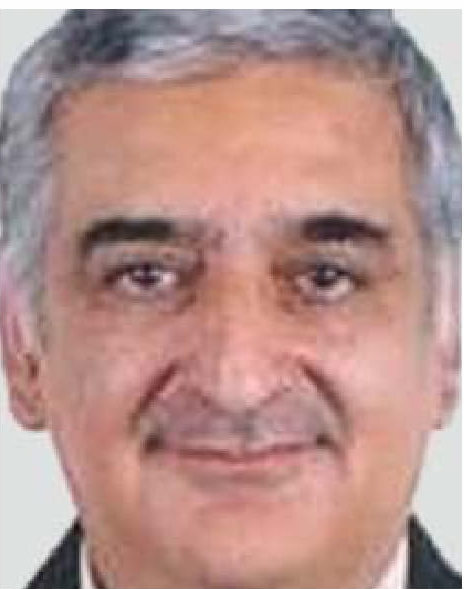
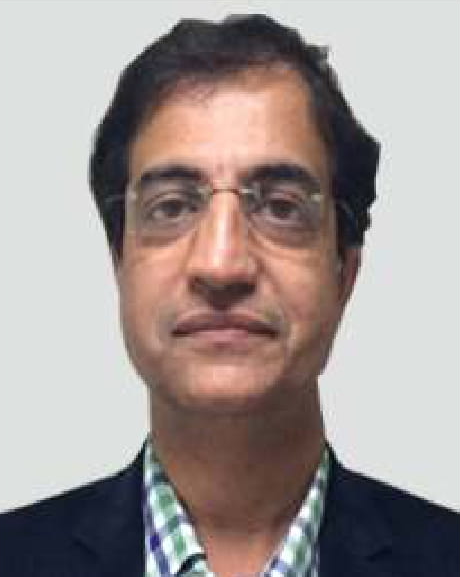
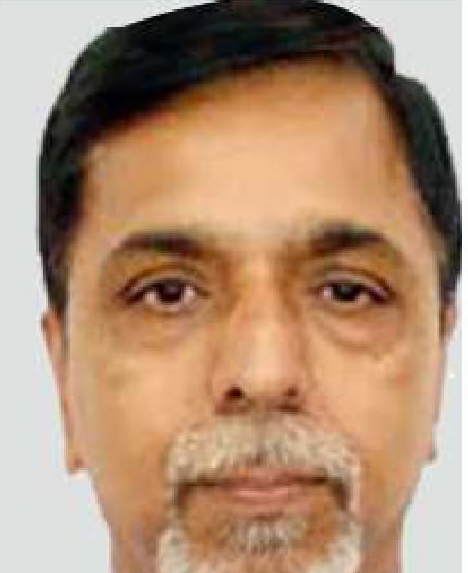
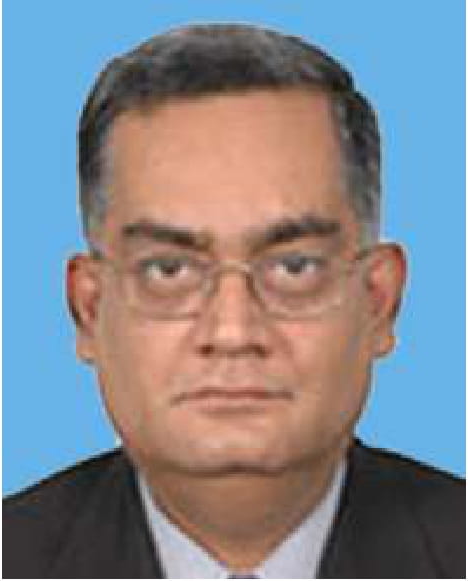
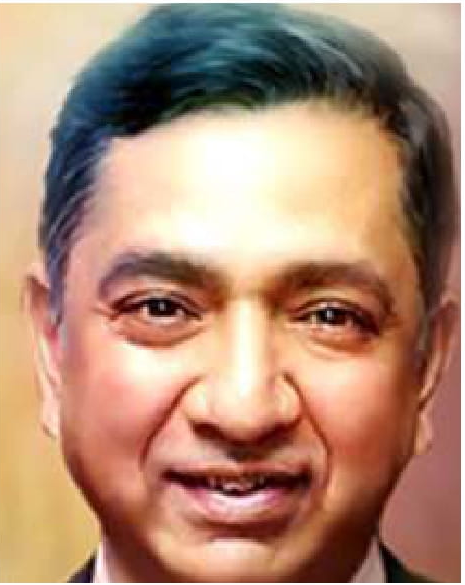
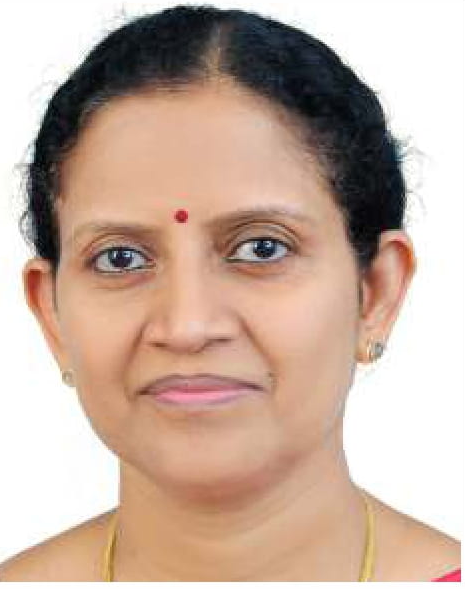
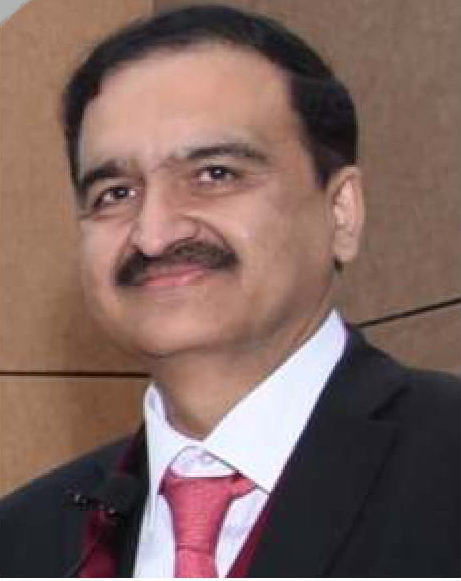
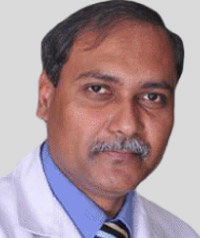
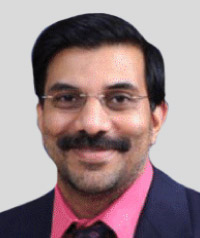
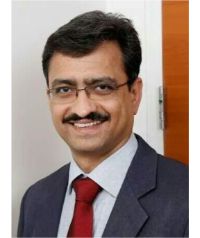
Honoring the distinguished leaders who have served as President of the Indian Stroke Association since its founding in 2002.
Clinical guideline documents and consensus resources from the Indian Stroke Association.
Browse the same guideline resources listed on the old ISA website. Each PDF opens inside this website with a dedicated reader page, while the COVID-19 consensus opens in the journal source.
Recommendations for the early management of acute ischemic stroke: a consensus statement for healthcare professionals from the Indian Stroke Association.
Endovascular treatment guideline resource from the ISA guideline section.
Supplement document associated with ISA acute stroke recommendations.
Consensus statement and suggested recommendations for acute stroke management during the COVID-19 pandemic.
Recommendations for the early management of acute ischemic stroke from the Indian Stroke Association.
If the PDF does not load in your browser, use Open PDF to view it in a new tab.
ISA guideline PDF for endovascular treatment.
If the PDF does not load in your browser, use Open PDF to view it in a new tab.
Supplement document for ISA recommendations.
If the PDF does not load in your browser, use Open PDF to view it in a new tab.
Understanding stroke — what it is, how to recognise it, who is at risk, and how it is treated. Knowledge saves lives.
In India, over 1.8 million people suffer a stroke each year, making it a leading cause of death and disability. The Indian Stroke Association (ISA) emphasizes the importance of swift action using the BE FAST method.
Sudden loss of balance or coordination, unexplained dizziness or falls.
Sudden blurred, double or lost vision in one or both eyes.
Ask the person to smile — does one side of the face droop?
Ask them to raise both arms — does one arm drift downward or feel numb?
Is speech slurred, strange or hard to understand? Ask them to repeat a phrase.
If you see any of these signs, call an ambulance and reach a stroke-ready hospital. Note the time symptoms began.
A stroke occurs when blood flow to a part of the brain is interrupted, either due to a blocked artery (ischemic stroke) or a ruptured blood vessel (hemorrhagic stroke). Acute Ischemic Stroke (AIS) is the most common type — caused by obstruction of cerebral arteries, leading to brain tissue damage due to lack of oxygen. When this happens, brain cells begin to die within minutes.
A blood clot or narrowed artery blocks blood flow to the brain.
TOAST Classification: Large-Artery Atherosclerosis (LAA) · Cardioembolic (CE) · Small-Vessel Disease / Lacunar · Other Determined Etiology · Cryptogenic (Undetermined)
A blood vessel in the brain ruptures, causing bleeding into or around the brain.
A temporary blockage of blood flow to the brain. No permanent damage, but symptoms mimic stroke and resolve within minutes to hours.
Warning: TIA indicates a high risk of future full stroke. Needs urgent medical attention.
Stroke risk factors are classified as non-modifiable (cannot be changed) and modifiable (can be controlled with lifestyle and medical management).
Most commonly affected. However, there is a rising incidence in younger adults (<55 years) due to smoking, obesity, and lifestyle changes.
Post-menopausal women face increased stroke incidence due to loss of estrogen’s vascular protective effect.
Those with high blood pressure, diabetes, high cholesterol, heart diseases (e.g., atrial fibrillation), or obesity are at much higher risk.
Tobacco and excessive alcohol damage blood vessels and increase blood pressure and clot formation.
Lack of physical activity increases risk of stroke-related conditions like obesity and high blood pressure.
Genetics plays a role. If close relatives had a stroke, your risk is higher.
Though rare, strokes can occur in newborns and children due to congenital heart defects, blood disorders (like sickle cell disease), or infections.
Stroke treatment depends on the type of stroke, time of onset, and the patient’s condition. The goal is to restore blood flow to the brain quickly, minimize brain damage, and improve recovery outcomes.
Acute stroke management is a medical emergency. Every minute counts — millions of brain cells die each minute during a stroke. Treatment focuses on reperfusion therapy, where the blocked blood vessel is opened as soon as possible.
There are two main evidence-based treatments for Acute Ischemic Stroke (AIS):
Must be given within 4.5 hours of symptom onset
Thrombolysis involves the use of a clot-dissolving drug — rtPA (recombinant tissue plasminogen activator), commonly Alteplase — to break down the blood clot blocking the brain artery. The rtPA activates plasminogen in the blood, converting it to plasmin, which breaks down fibrin, the main component of blood clots.
A patient can receive IV thrombolysis if:
Ideally within 6 hours — up to 24 hours in selected patients
Mechanical thrombectomy is a minimally invasive surgical procedure where a blood clot is physically removed from the brain artery using a catheter-based device. A catheter is inserted through a groin or wrist artery, navigated to the brain artery where the clot is located, and a stent retriever or suction device grabs or aspirates the clot — restoring blood flow to the affected brain area.
Foundation of stroke management from early hours through recovery
Supportive care ensures the patient remains stable and safe, preventing complications and improving recovery chances.
Oxygen saturation must be kept above 94%. Patients with decreased consciousness or impaired swallowing may need oxygen therapy or mechanical ventilation.
For patients not eligible for thrombolysis, BP up to 220/120 mmHg may be allowed. For those receiving IV tPA, BP must be reduced to ≤185/110 mmHg before treatment.
Both hypoglycemia (<60 mg/dL) and hyperglycemia (>180 mg/dL) worsen brain injury. Blood sugar should be maintained between 140–180 mg/dL.
Elevated temperature increases brain injury. Antipyretics (like paracetamol) should be used to manage fever promptly.
IV fluids (e.g., normal saline) may be given carefully. Nutrition via feeding tubes may be needed for patients with swallowing difficulty.
Stroke patients are at risk of pneumonia, urinary infections, and bedsores. Early mobilization and proper nursing care are crucial.
Seizures may occur post-stroke. If they do, antiepileptic drugs may be started promptly.
For preventing further clot formation and reducing recurrence
Antiplatelet Therapy — Indicated for non-cardioembolic ischemic stroke (e.g., caused by large artery atherosclerosis or small vessel disease).
Anticoagulant Therapy — Indicated for cardioembolic strokes, especially due to atrial fibrillation (AF).
Once the immediate danger is controlled, the focus shifts to preventing another stroke — a lifelong process involving medications, lifestyle changes, and monitoring.
Target BP: <140/90 mmHg. Common medications: ACE inhibitors, ARBs, calcium channel blockers, diuretics.
High-dose statins (e.g., Atorvastatin 40–80 mg) to lower LDL cholesterol <70 mg/dL. Statins also stabilize plaques and reduce inflammation.
Maintain fasting glucose and HbA1c in target range. Use metformin or insulin if needed under medical supervision.
Based on stroke type and individual risk profile. Lifelong aspirin or DOACs may be continued.
Yes, for secondary prevention, long-term management of risk factors is necessary. This includes:
Yes, stroke is largely preventable through:
Effective control of modifiable risk factors such as BP, diabetes, and lipids.
Smoking cessation is an important step in lowering stroke risk.
Physical activity helps reduce stroke-related risk factors and supports better vascular health.
Regular health checkups help detect atrial fibrillation and other conditions.
Eat a healthy diet high in fruits, vegetables, whole grains, and nuts. Keep it low in salt, sugar, saturated fats, and processed foods.
Maintaining a healthy weight reduces risk of diabetes, high BP, and heart disease.
Atrial fibrillation (AFib) increases clot risk and needs anticoagulants. Regular heart check-ups are important.
TIAs (mini-strokes) are warnings. Take them seriously. After a TIA, strict prevention is needed to avoid a full stroke.
Physiotherapy is crucial for recovery, especially in elderly.
It helps with:
Regaining motor skills, speech, and daily function.
Preventing stiffness, pressure ulcers, and falls.
Enhancing independence and quality of life.
Early, multidisciplinary rehabilitation includes physiotherapists, occupational therapists, and speech therapists.
For any doubts and inquiries, feel free to email us at info@stroke-india.org and our top doctors will respond with expert guidance.